
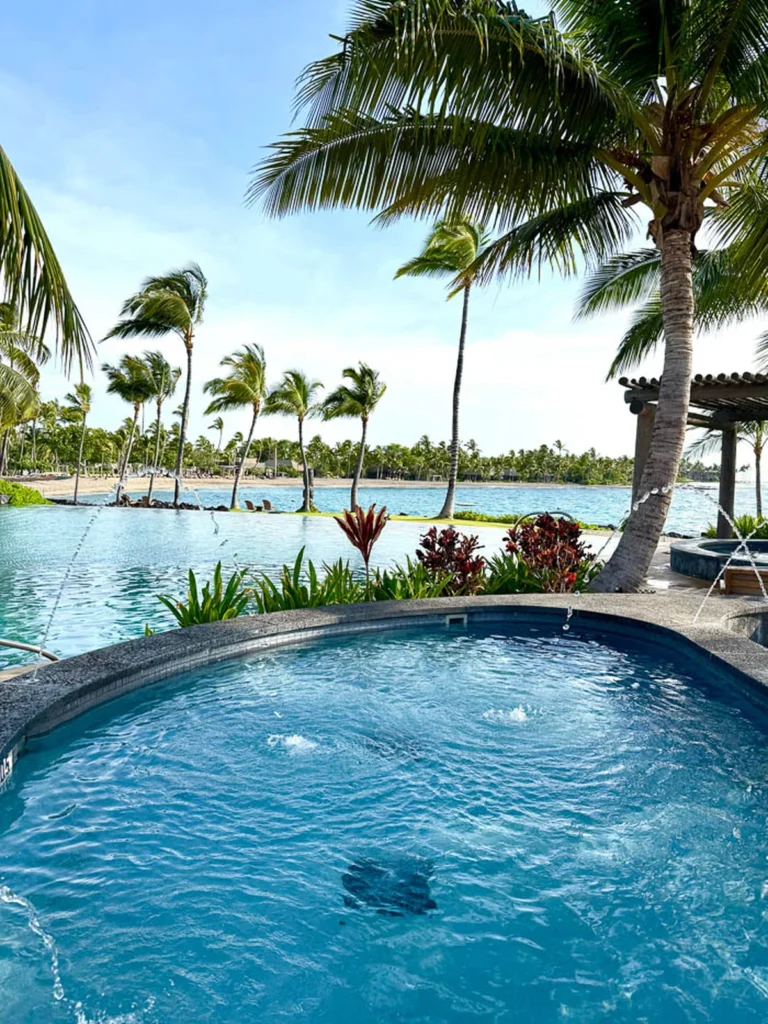
The first thing I noticed on the drive up to Kona Village was that there was no lobby. No glass tower. No “welcome to the resort” banner. Just a slow road through palms, and then, quietly, a pool that seemed to end exactly where the ocean began. That’s when I understood what all the quiet talk about this place was about.
A quick orientation before we get into it: the resort is small in the way that matters. 150 hales, 81 acres, one coastline. Rates vary by season and room category — the property doesn’t publish a fixed nightly range — so check directly before you book.
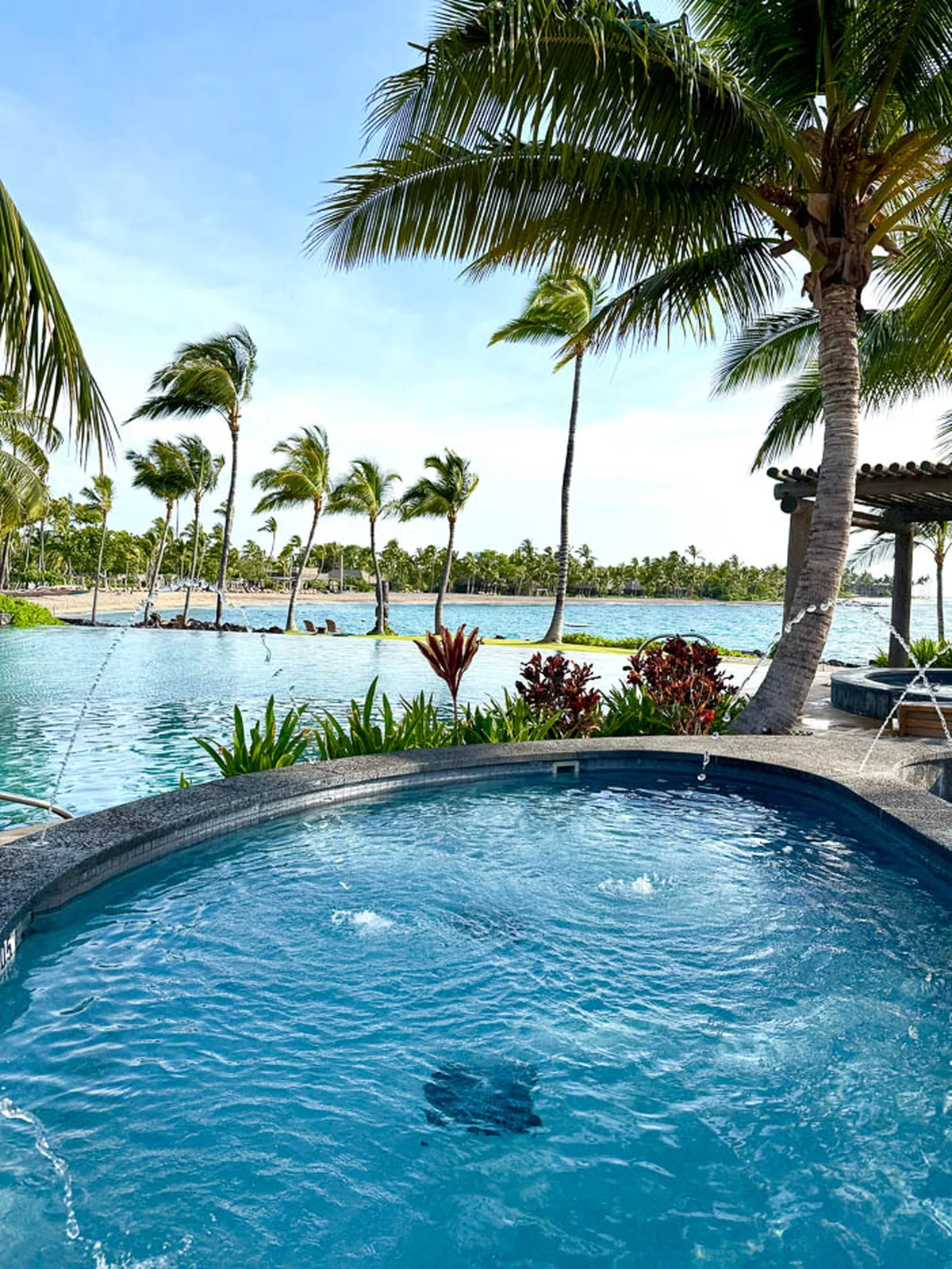
Kona Village reopened in 2023 after more than a decade closed, and by the time I arrived, most people I knew who’d stayed there had the same thing to say: it was peaceful. Not “relaxing in the way a massage is relaxing” peaceful. The deeper kind — the kind where you stop checking your phone because nothing is asking for your attention.
Here’s my honest take after several days on the property, and who it’s actually for.
What it’s like to stay here
Most luxury resorts on the Big Island are built around a central building. Kona Village isn’t. It’s spread across 81 acres of coastline, and the rooms — they’re called hales here — stand alone. There are 150 of them, and that number matters, because it means you’re never elbow-to-elbow with anyone. I’ve stayed at five-star properties in Hawaii where the 7 a.m. battle for a pool lounger felt like a small war. Here, I never once saw a queue.
The grounds do the wandering for you. There are fishponds, walking paths, lava fields, palm groves, and little hidden beaches tucked in corners you won’t find until you’ve actually gone looking. I spent a good part of each day just biking the property, which turned out to be the best “activity” of the trip. Kona is one of the driest parts of the island, so the weather was on my side most of the time.
If you’re the type who wants a resort with a pool party, a stage, and a schedule, this may feel too quiet. If you’ve been to a few resorts and what you actually want is for everyone to slow down — this is it.
A short history, because it adds up
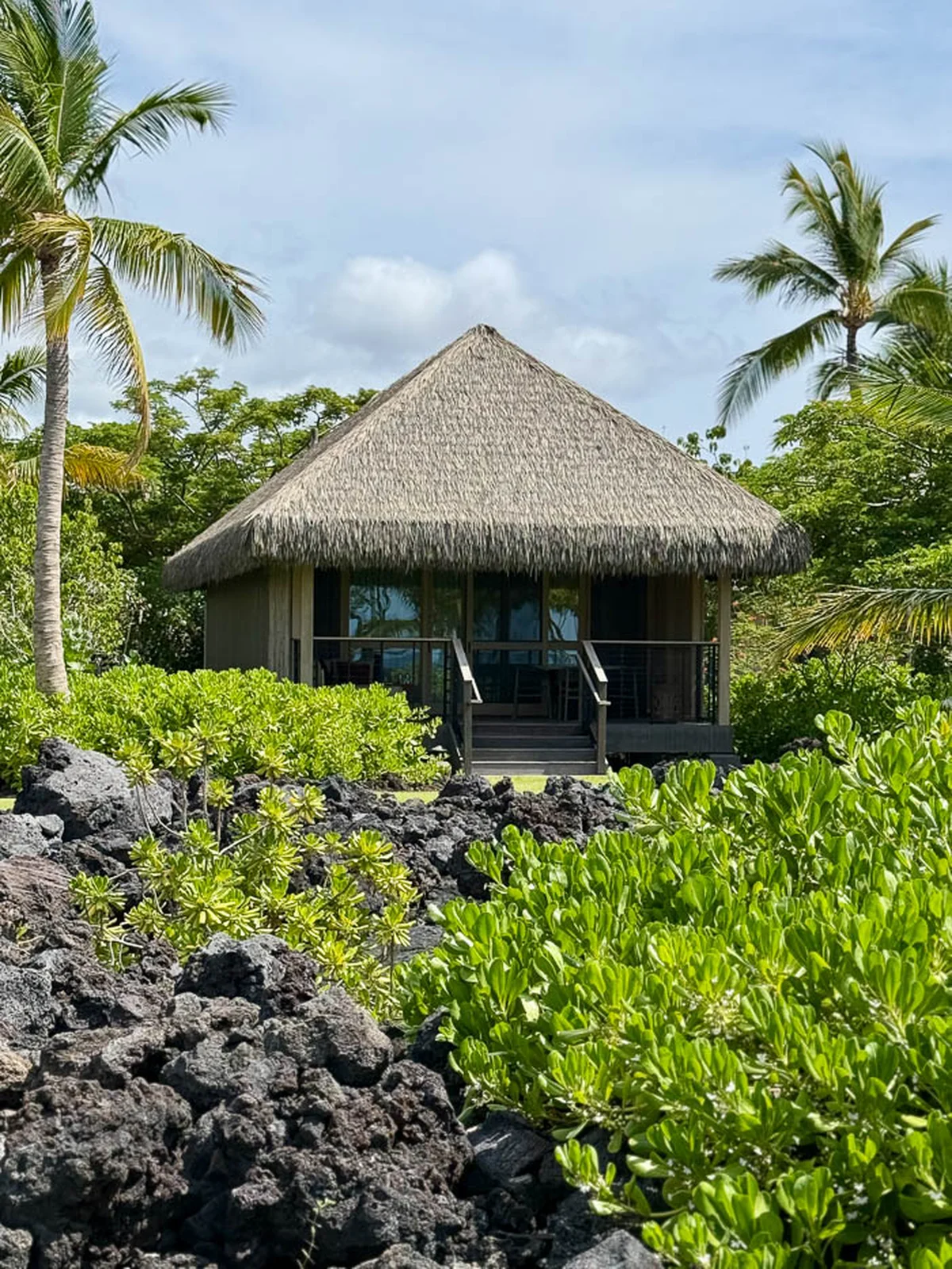
The original Kona Village opened in the 1960s and built its name on exactly this kind of unhurried, hale-based atmosphere. The 2011 tsunami damaged it badly, and the resort stayed closed for over a decade before reopening under the Rosewood name in 2023. What I appreciated was how much of the original feel survived the rebuild. No hotel towers went up in their place. The hales are still scattered across the land, and the whole property feels like a small coastal community rather than a hotel that happens to be near the beach.
Rooms that don’t feel like a hotel

Stepping out of your hale, you’re in the landscape. There’s no hallway, no elevator, no “room 412” energy. The interiors are fresh and modern with Hawaiian design woven through them, and the indoor-outdoor flow works really well in this kind of climate. Breakfast arrived one morning on a tray with fruit and a copper pot, and for a few minutes it felt less like a hotel stay and more like a very good guesthouse.
If you’re traveling with a bigger group, there are four-bedroom villas with butler service, and they’re well suited to multigenerational trips.
The pools and the beach
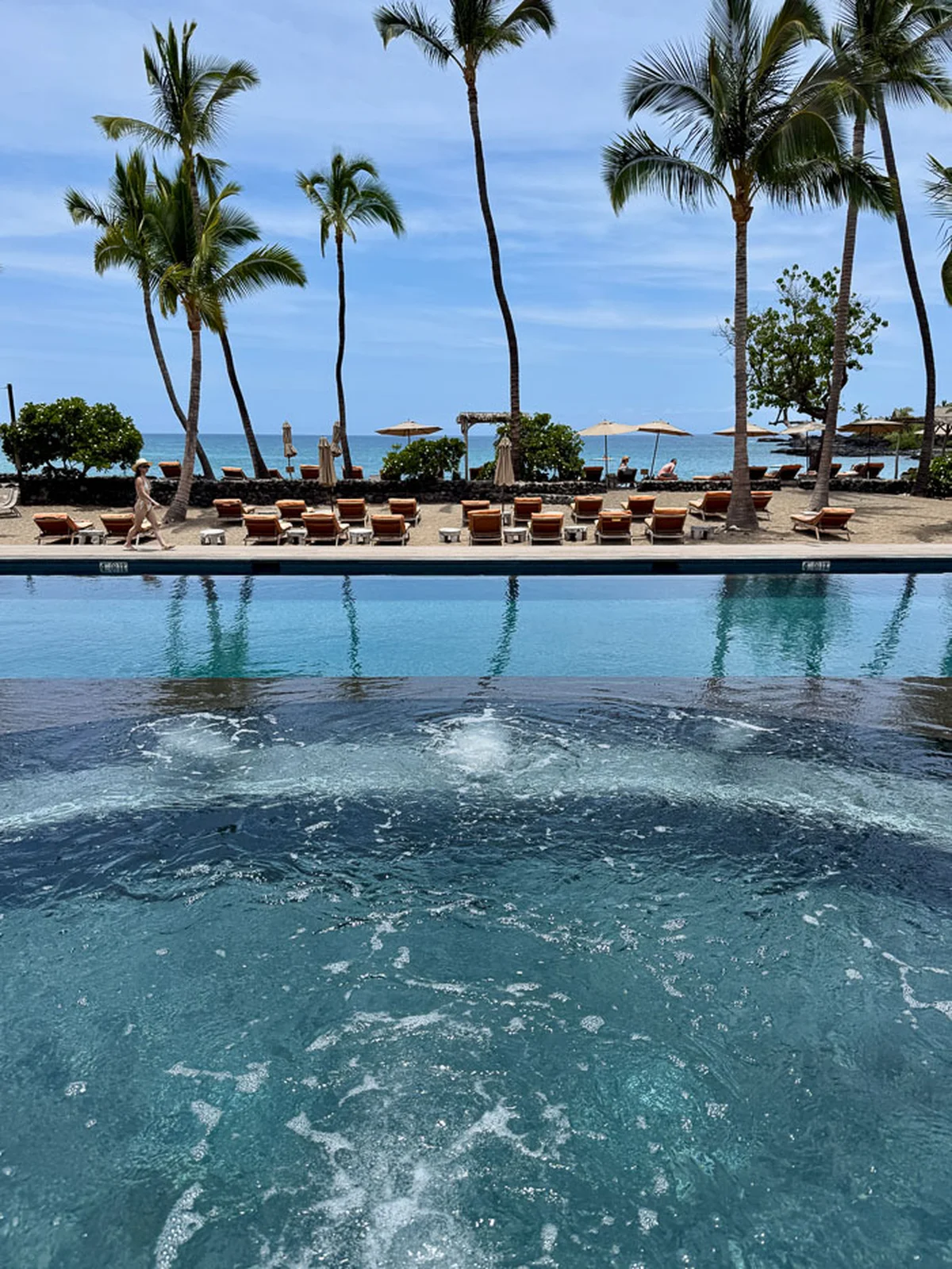
The main pool sits at the edge of the property and does a good job of being both family-friendly and calm. There’s a dedicated adults-only pool if you want a quieter corner, and the service around the pool is attentive without hovering. Popsicles most days, shave ice twice a week, and a poolside shave ice station made with real fruit juice that became a small daily ritual.
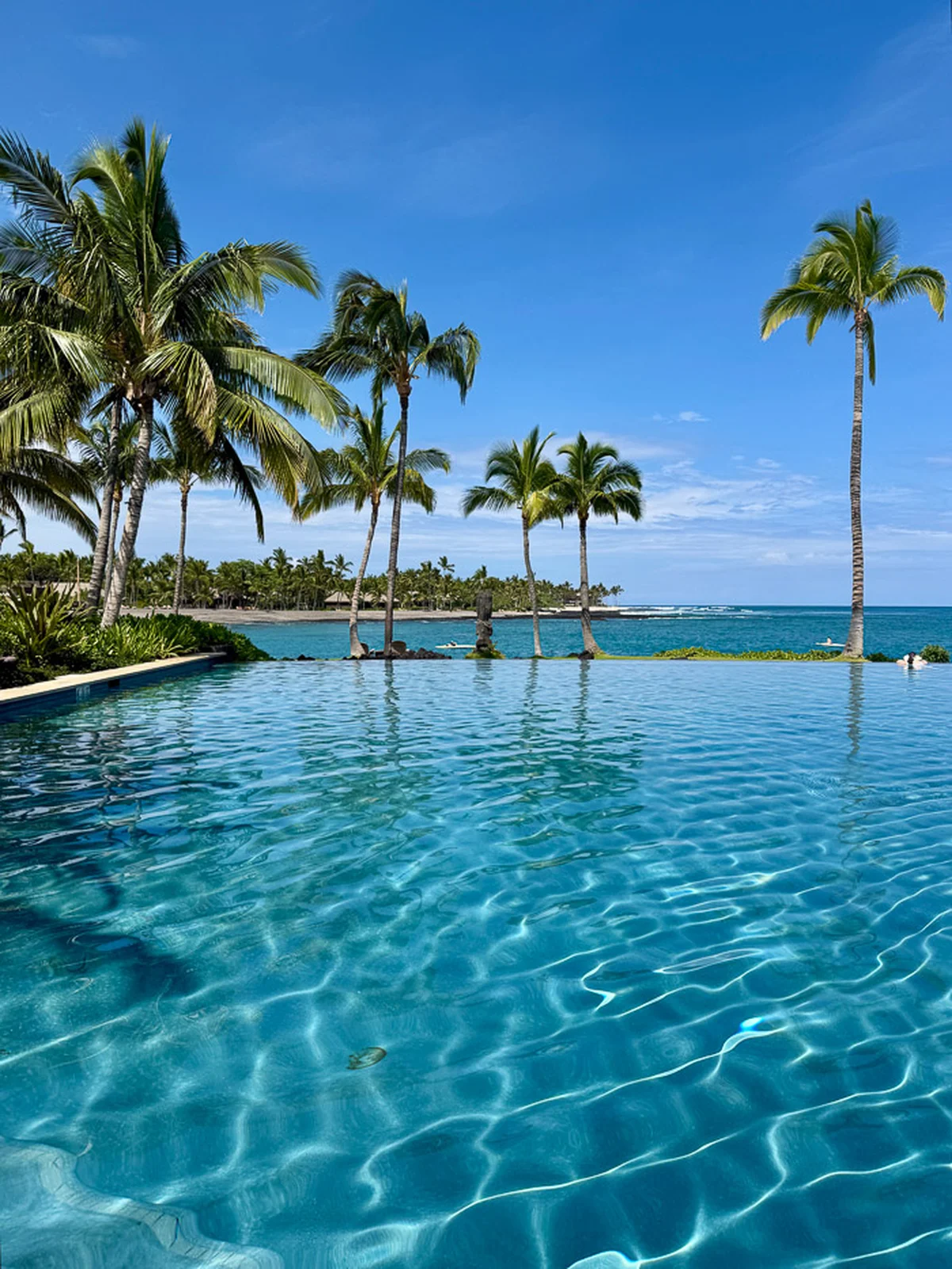
The beach is the part I didn’t expect to love this much. Much of the Big Island’s coastline is rough or hard to get to. This bay is protected, so the water stays calm most of the time. I snorkelled the first afternoon and was looking at colourful fish within minutes of getting in. Paddleboards, kayaks, and snorkel gear are included in the daily resort fee, along with a sunrise outrigger canoe paddle. That last one is the one I’d plan around.
Is it worth it? My honest answer
If you want waterslides, nonstop programming, and a high-energy atmosphere, there are better options on Maui or Kauai. If you’re after space, genuine calm, strong snorkelling, and a resort where you can actually settle into a rhythm, Kona Village is one of the best I’ve stayed at in Hawaii.
What I’ll remember isn’t a particular meal or activity. It’s how easy it was to stop performing “being on holiday” and just be there.
FAQ
Is Kona Village good for families?
Yes. It’s genuinely family-friendly without feeling chaotic. The spread-out layout means kids have room to move, and the beachfront restaurants make dinnertime easier with a child at your side.
Do I need a car at the resort?
No. Most guests get around by bike, and the resort provides adult bikes, kids’ bikes with training wheels, and child seats for younger riders. Biking is often faster than walking here, and it fits the pace of the place.
When is the best time to go?
Kona is one of the driest parts of the island, so the weather is reliably on your side for most of the year. If you’re set on a specific season, check availability a few months ahead — it’s a small resort and books up.
A note from Luna: the quietest part of the trip was the drive home. I kept expecting to miss the noise, and I didn’t.