
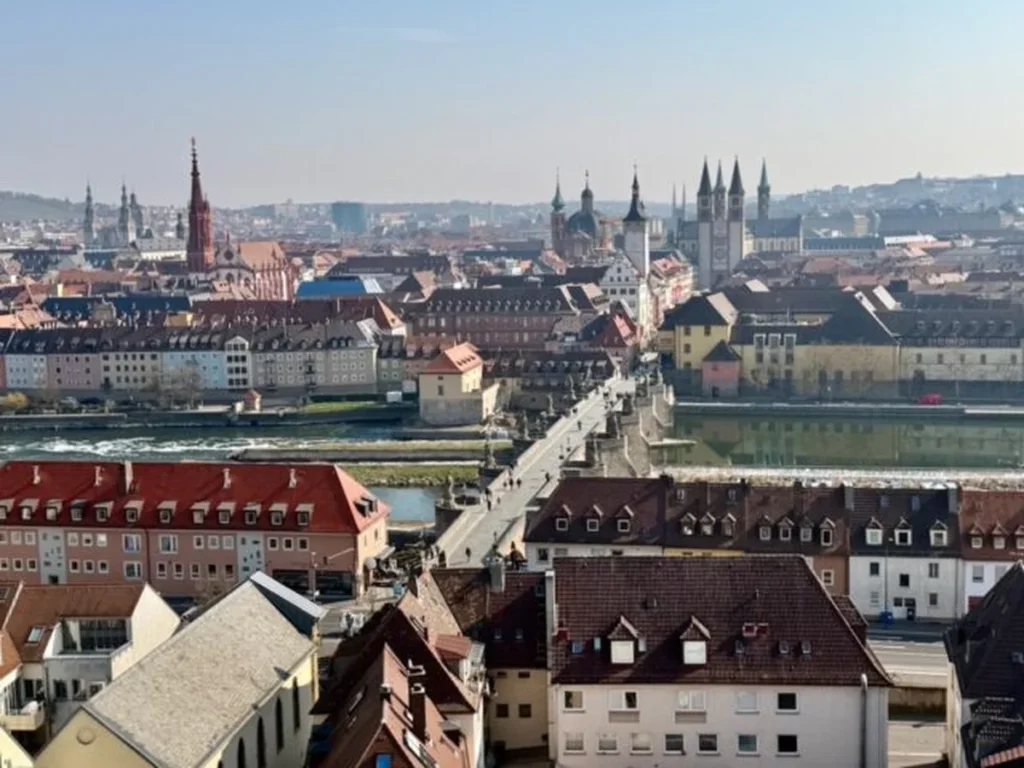
The train pulled into Würzburg Hauptbahnhof just as the light went soft over the river. No itinerary, no checklist — I had a camera, a notebook, and the kind of evening that only happens when you stop planning. The vineyards on the hill behind the station were already dark, but the old town ahead was lit like a stage.
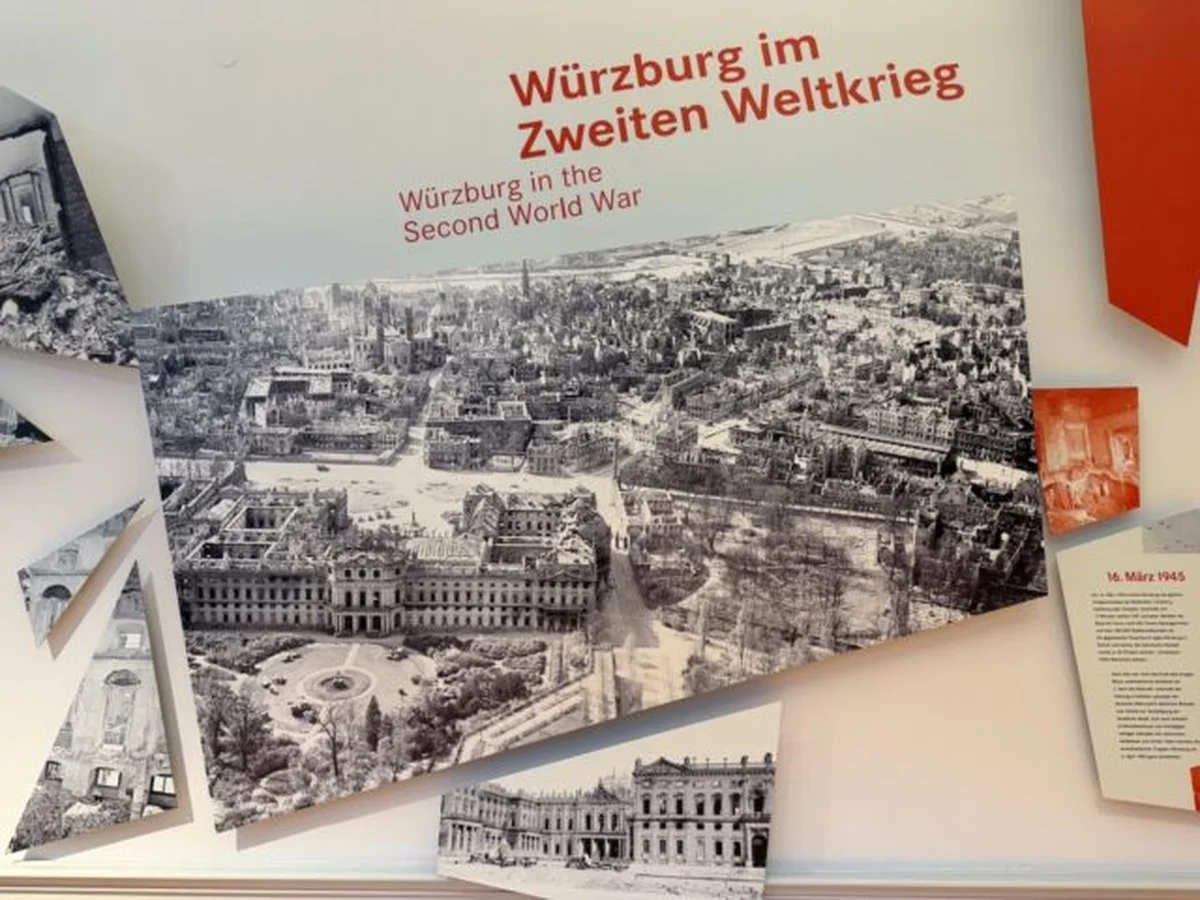
Here’s the thing about this place: it’s small enough to lose track of time, and deep enough that you won’t. A thousand years of history sit in the stone. An air raid on 16 March 1945 destroyed 90% of the historic centre, and the city rebuilt almost everything by hand. When you walk here, you’re walking through patience.
Start where the city starts: Marktplatz
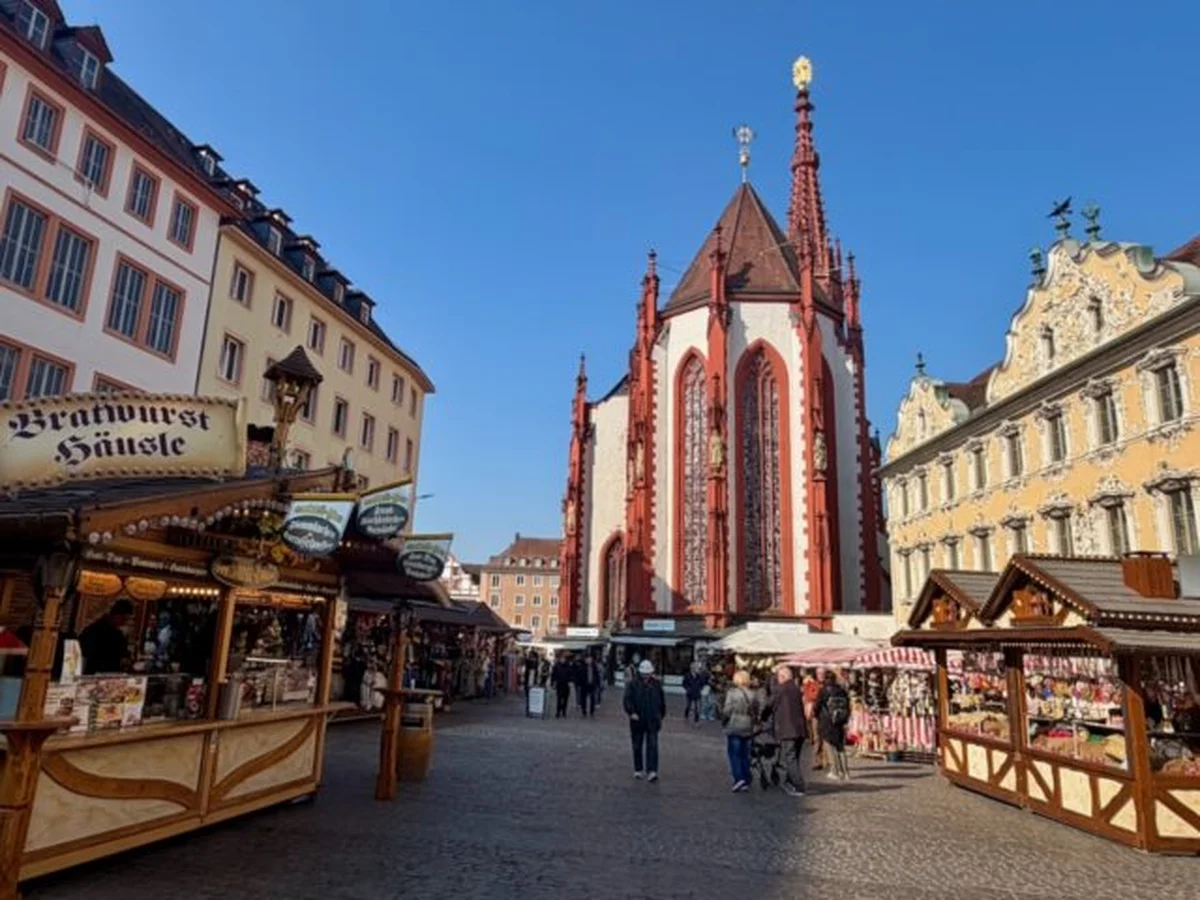
The Market Square is the kind of hub where you can buy a bratwurst, watch the square fill up, and just stand there for a while. It doesn’t try to be anything other than a working town square, and that’s exactly why I like it. The bright yellow Falkenhaus on the corner houses the tourist office, and its Rococo details are the kind of thing you photograph without meaning to.
Just over, St. Mary’s Chapel is a 14th-century Gothic building that survived the war badly and was restored in the 1950s. Two of the most famous sculptures inside — Tilman Riemenschneider’s Adam and Eve — now live in the Museum für Franken up on the Marienberg Fortress. Replicas remain in place, and the chapel is the final resting place of Balthasar Neumann, the Baroque architect who designed the Residence. A small, quiet fact to keep in mind as you walk.
The Residence: one staircase, one fresco, one hour you’ll remember
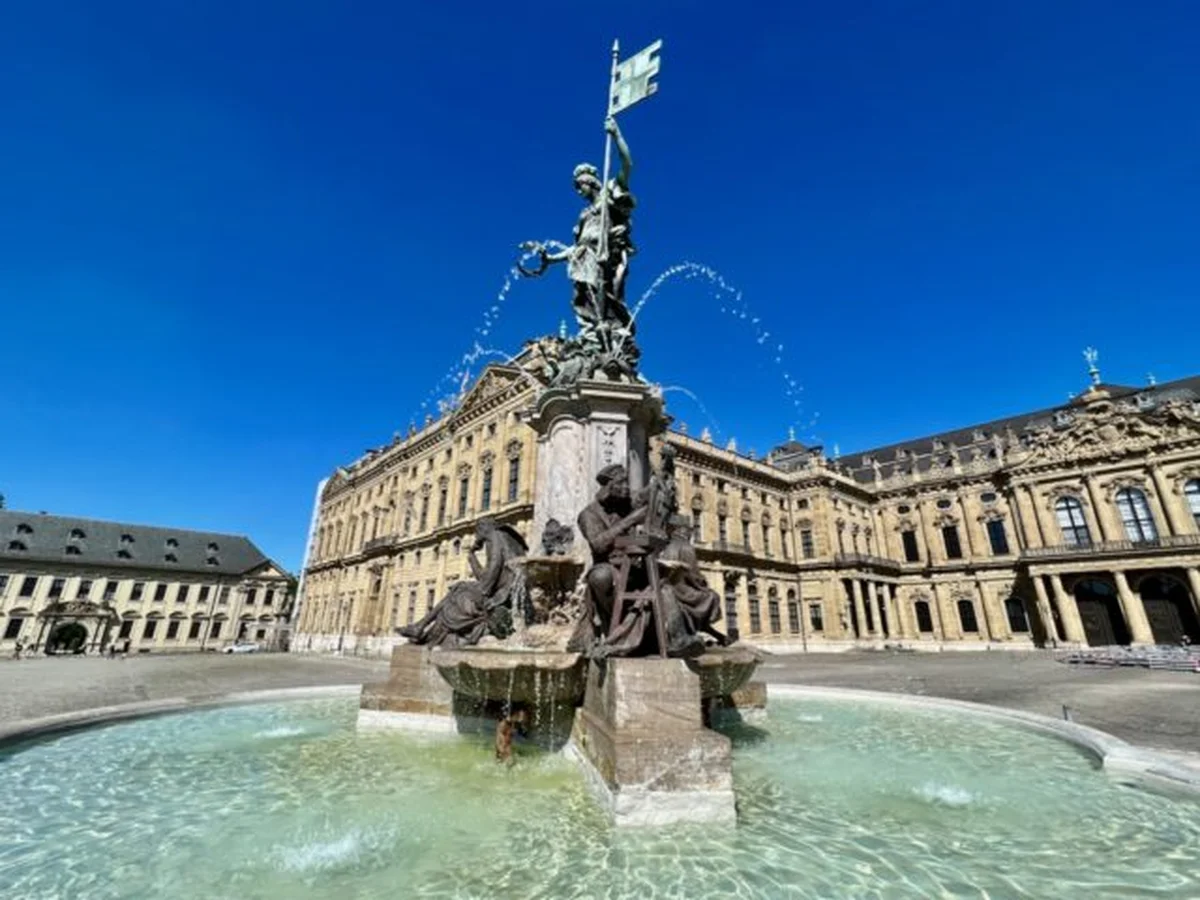
The Würzburg Residence is the landmark everyone means when they say this city is a Baroque masterpiece. Built between 1720 and 1744 by Balthasar Neumann for the prince-bishops, it’s a UNESCO World Heritage Site and, honestly, the one thing in town that justifies the word “grand.”
The grand staircase is the reason to go in. The ceiling carries the world’s largest fresco, painted by Giovanni Battista Tiepolo. You stand at the bottom and the ceiling seems to lean toward you. The Imperial Hall, the Hofkirche, and the Mirror Cabinet are all worth the slow walk through. And yes — there’s a wine cellar, the Hofkeller, with guided tours. I did one.
Wine isn’t a side note here. It’s the point.
Würzburg sits in Franconia, and Franconia makes wine in a way that’s easy to dismiss until you’ve had a glass. The grapes are local — Silvaner, Riesling, Bacchus, Müller-Thurgau — and the bottles are flat, round Bockschädel shapes you’ll want to take home as souvenirs.
Juliusspital is one of Germany’s oldest wineries and, more oddly, still a functioning hospital and retirement home. It was established in 1576, and the 18th-century northern wing designed by Antonio Petrini opens into a wine cellar that’s genuinely enormous. The Weinstuben inside is the easiest way to pair a glass with a plate.
If you want to keep it simple, the tourist office sells a Würzburg Wine Pass for €15. It holds six vouchers for glasses of wine at different venues, including a spot on the Old Main Bridge. I used mine at sunset, which might have been the best hour of the whole trip.
The Old Main Bridge at golden hour
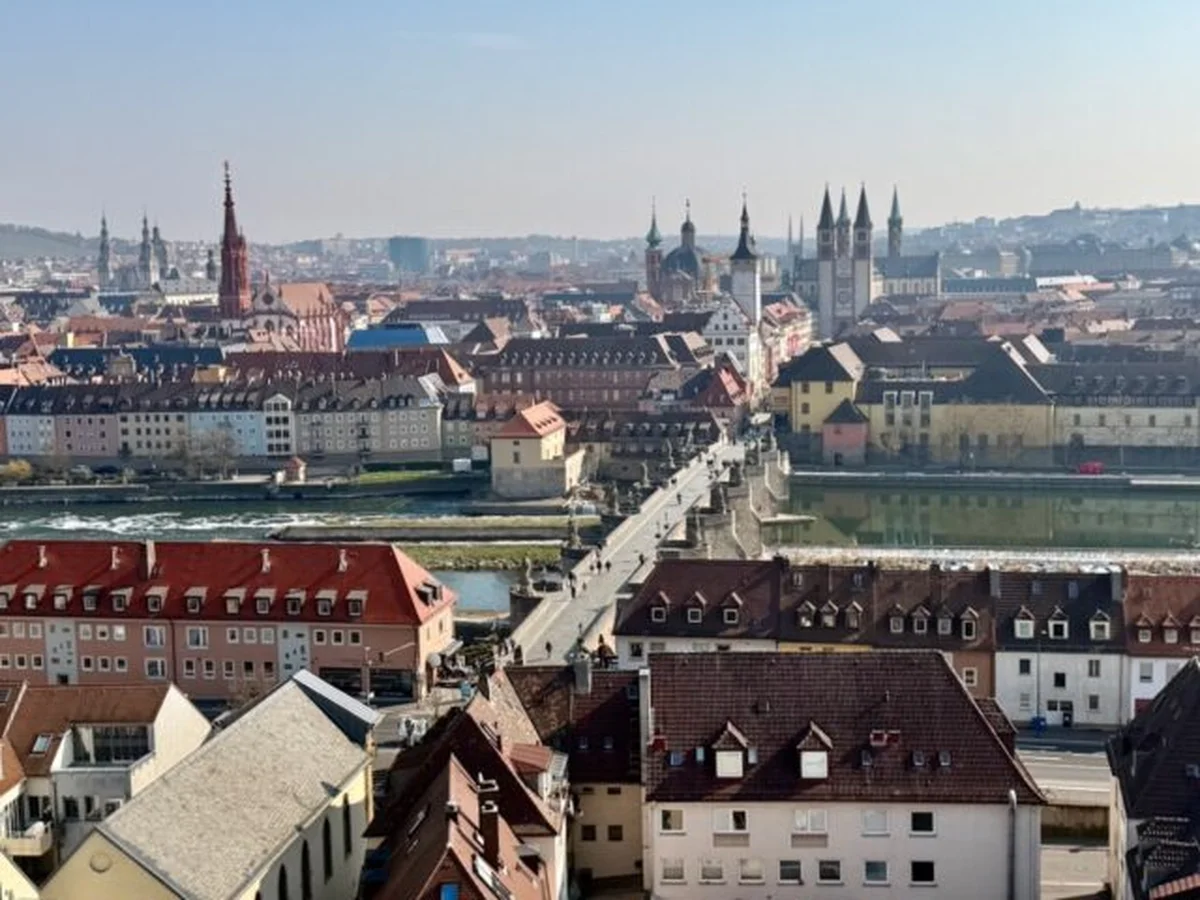
The Old Main Bridge was built between the 15th and 16th centuries and is decorated with twelve statues of saints and figures, including Charlemagne and St. Kilian. It’s one of the most photographed things in the city, and for good reason. But the photo doesn’t capture the ritual: locals gather at sunset for a Brückenschoppen — a glass of Franconian wine on the bridge. Join them. It’s the kind of thing you can’t manufacture.
Two hills, two very different rewards
The Marienberg Fortress sits high on the left bank of the Main, and it was the prince-bishops’ home before the Residence. The climb is worth it for the view alone — the whole old town spreads out below, ringed by vineyards. Inside, the Museum für Franken holds Riemenschneider’s wood carvings, including the Mourning Madonna. His work is expressive in a way that photographs don’t do justice.
The Käppele is on the other side of the hill, an 18th-century Baroque chapel by Neumann. A way of the cross with 14 Stations of the Cross leads up to it. The climb is steeper than the fortress, and the interior is small and luminous. If you only have time for one, go for the fortress. If you have an hour to spare, do both.
Where to eat: four rooms that earned their spot
Würzburger Ratskeller is in the cellar of the Old Town Hall, under vaulted ceilings covered in frescoes. The food is hearty Franconian in the old sense, and the room does half the work.
Gasthaus Alte Mainmühle sits by the Old Main Bridge in a converted mill. The view of the bridge and the fortress is the best in town, and the food is local with a contemporary edge.
Weinstuben Juliusspital is the obvious pairing with the winery, and it’s worth doing both in the same afternoon.
Wirtshaus am Dom is behind the Cathedral — bright, airy, and generous with portions. It’s the one I’d go back to.
Where to stay and how to get there
Two to three nights is the right amount of time. I stayed at Barthels Boutique Hotel, just behind the New Minster and the Cathedral. The rooms are spacious, the interior is deliberately quirky, and there’s a rooftop terrace that faces the skyline. I didn’t take the photo of the view because by then I’d already seen enough of the city from above to know it would disappoint the memory.
Würzburg sits between Frankfurt and Nuremberg on the rail line, which makes it easy to reach. Frankfurt has an international airport; Nuremberg has a regional one with links into Europe. The train from either city is a short, easy ride into a place that feels like it’s been waiting for you to arrive slowly.
Festivals, if your timing lines up
The Mozart Festival runs in May and June. Kiliani Volksfest comes in July. And in March, the Würzburger Frühjahrsvolksfest — a spring beer and fun fair — is the closest thing this city has to an early Oktoberfest. Music, dance, local food, and a lot of beer. It’s loud in the good way.
FAQ
How much time do I need in Würzburg? Two to three nights. The old town is compact and walkable; the two hilltop sites and the wine trail take a full day if you want to do them properly.
Do I need a car? No. Everything central is within walking distance. The train from Frankfurt or Nuremberg is the easiest way in.
Is the Wine Pass worth it? Yes, if you’re curious about the local wine without committing to a restaurant. €15 for six glasses across different venues is a low-pressure way to taste what Franconia actually makes.
A note from Luna: some evenings you plan everything and it still feels thin. This was the kind of evening where the plan fell apart around the second glass, and the city filled in the gaps. That’s the whole point of going somewhere slow.
Related reading: Slow Travel” class=”internal”>Slow Travel guides · Travel” class=”internal”>Travel