
It’s dark on deck and the wind has teeth. I’m bundled into a raincoat that isn’t warm enough, a glass flask pressed against my chest, my free hand locked to the railing. The ship lurches, and for one bad second I’m sure the ocean is going to take the flask — and me — both.
That was me, on the highest deck of an expedition ship heading toward Antarctica, collecting air samples for a climate study. No lab coat. No safety net. Just a valve to open, five seconds of sucking air into glass, and the long wobble back down the stairs.
What citizen science travel actually is
Most people picture science happening somewhere indoors, in a white lab, run by people who found math easy. Citizen science is the other kind: ordinary people — travelers, rangers, birders, beach walkers — collecting observations and data that scientists then use. Some projects are run by universities and research institutes; some are community-led with scientists checking the design and the numbers.
Citizen science travel is simply doing that while you’re on the move. Expeditions that partner with research teams, visitor programs in national parks, apps that turn your phone into a data logger. You’ve probably passed a dozen of them without noticing.
My Southern Ocean fieldwork
I’ll be honest: science was never my strong subject. So when my second trip to Antarctica came around and the crew at Heritage Expeditions asked if I’d help collect samples for a study on the Ross Sea, I said yes before I’d finished the question. It was a way to contribute to a field I knew I’d never work in myself.
The Ross Sea and the wider Southern Ocean are remote and rarely visited, which means there are still big gaps in what we know about the region. Research there is expensive, so it leans on partnerships with expedition companies and on travelers willing to hold a flask steady in a crosswind.
Heritage’s roots are scientific. The Spirit of Enderby, the ship we sailed, was a research vessel in a former life, and the company’s founder started his career as a researcher. As he puts it, a lot of the projects they support have $0 in funding, and when their ships are crossing parts of the ocean almost no one else crosses, contributing even a small amount of data benefits everyone.
What the study was about
The work was part of a study by Dr. Jocelyn Turnbull on carbon dioxide sinks. I was asked to collect 9 air samples during the crossing. Since I wasn’t great in science, I asked her to explain what a carbon sink is in plain language.
“We all know global warming comes from burning fossil fuels — coal, oil, natural gas — which puts carbon dioxide into the atmosphere and makes the world warmer,” she told me. “What you may not know is that of the CO2 we produce, only about half stays in the atmosphere.”
The other half, she explained, gets taken up by land and ocean. The big question is what drives that uptake, and whether the sinks can fill up — which would speed up warming — or whether we can learn to help them take in even more.
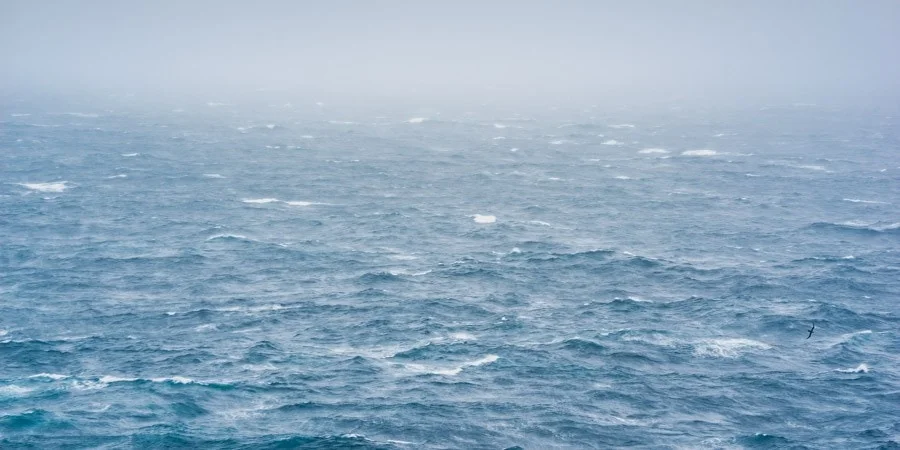
It turns out the Southern Ocean is the most important of these sinks on Earth: it takes up more CO2 than any other region in the world. And that’s where I came in. My job was to add more data while the ship crossed that ocean — a carbon sink, in other words.
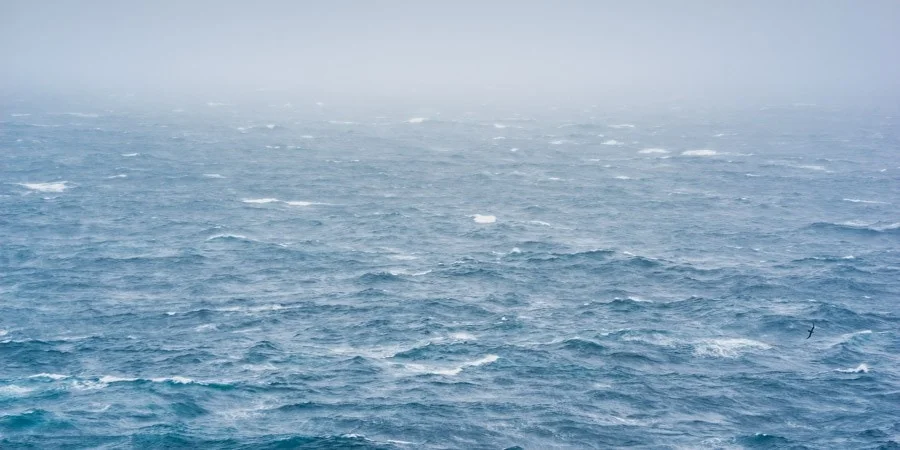
One thing the study keeps running into: the measurements disagree. Research based on direct CO2 measurements over the Southern Ocean suggests the stronger westerly winds have made the ocean worse at removing carbon. Model simulations of ocean processes give the opposite answer — that the Southern Ocean has been getting better at it. As Dr. Turnbull put it, the problem is that we just don’t have enough measurements in the Southern Ocean or the atmosphere above it. That gap is what the flask was for.
Safety, honestly
Collecting the samples wasn’t hard technically. It was hard environmentally. The monkey deck — the highest deck on the ship, above the bridge, and the one that moves the most in Southern Ocean swells — was cold, windy, and slick with spray. I went up slowly, both feet on each step, one hand on the railing the entire time, the flask tucked under my arm like a fragile child.
If a trip offers you a chance to help with research, ask what will actually be expected of you. “Citizen science” can mean opening a valve, but it can mean doing that in real expedition conditions, where steady footing, proper cold-weather gear, and comfort with ship movement matter as much as the task itself. Only take the role if you’re physically up for it.
It wasn’t just the air samples, either. On the same trip we deployed weather buoys in the higher latitudes, and the ship delivered helicopter fuel to the Subantarctic Islands for search and rescue operations. Participatory science like this isn’t part of Heritage’s regular itineraries — I was simply asked to help on this particular voyage. But holding the handrail with one hand and a glass flask with the other on the way back down, it felt like more than going through the motions. Maybe one day I can tell my niece’s kids that their great aunt helped slow global warming by simply traveling.
How you can do it on your own trips
You don’t need a research vessel in Antarctica. (Although I highly recommend it.) A phone, some curiosity, and the willingness to actually look at the place you’re in is a start.
Use the apps. iNaturalist lets you photograph plants, animals, fungi, and insects; the app and a community of experts identify the species, and your sightings feed a global biodiversity database. A morning hike quietly becomes a mini wildlife survey. eBird, run by the Cornell Lab of Ornithology, works the same way for birds — log what you see and hear, and it helps scientists track migration and population changes worldwide. If you’re near a coast, the Marine Debris Tracker lets you log the plastic you find on the beach, data researchers use to trace where ocean debris comes from.
Ask at the visitor center. Many national parks and protected areas run citizen science programs: wildlife sighting reports, pollinator counts, tracking seasonal plant changes, monitoring invasive species, camera-trap documentation. In the US the National Park Service runs several; other countries have their own equivalents through park services and national trusts. If you didn’t plan ahead, just ask the rangers when you arrive — they usually have simple ways for visitors to contribute.
Search before you go. SciStarter lists citizen science projects around the world, searchable by location, topic, and type of activity. Some are one-time observations; others let you join researchers for part of their fieldwork. And yes, sometimes those look exactly like what I did in Antarctica.
Small ways it fits everyday travel
On a road trip, log wildlife, plants, and trail conditions with the apps — especially useful if you visit the same places repeatedly. On a coastal holiday, join a beach litter survey or check the intertidal at low tide. On a city break, record birds, pollinators, heat, or noise where researchers track how environments affect health. And even from a train seat or a hotel bed with spare time, you can classify photos and audio for ongoing projects. It doesn’t take an expedition to count as data.
The Golden Hour
On a calm evening near the Ross Sea, the light went amber and the sea went glass. I stood on deck with my notebook out, writing down the day’s samples — where, when, wind, temperature — and for a while the ship wasn’t rocking at all. That was the hour I’d cross an ocean for.
FAQ
Is citizen science travel ethical?
It is, when the projects are transparent, science-led, and follow clear protocols that protect wildlife, habitats, and local communities. If the methods or data use are vague, if it pushes close wildlife contact, or if it feels more like marketing than research, that’s a red flag.
Do I need scientific training?
No. Most projects are designed for beginners and come with simple instructions or a short briefing. You mainly need to follow the protocol carefully and be comfortable with the conditions — weather, terrain, or ship movement — where the data gets collected.
Do I have to pay for an expedition cruise?
Not at all. Many projects are free or low-cost through national parks, local conservation groups, and the app-based programs you can run on a regular trip. An expedition cruise is one option, not a requirement.
A note from Luna: not every trip is perfect, and some nights you’re still going to be waiting in a station for the first train. But on the ones where you leave a little more data behind than footprints — the place starts to know you were there.