
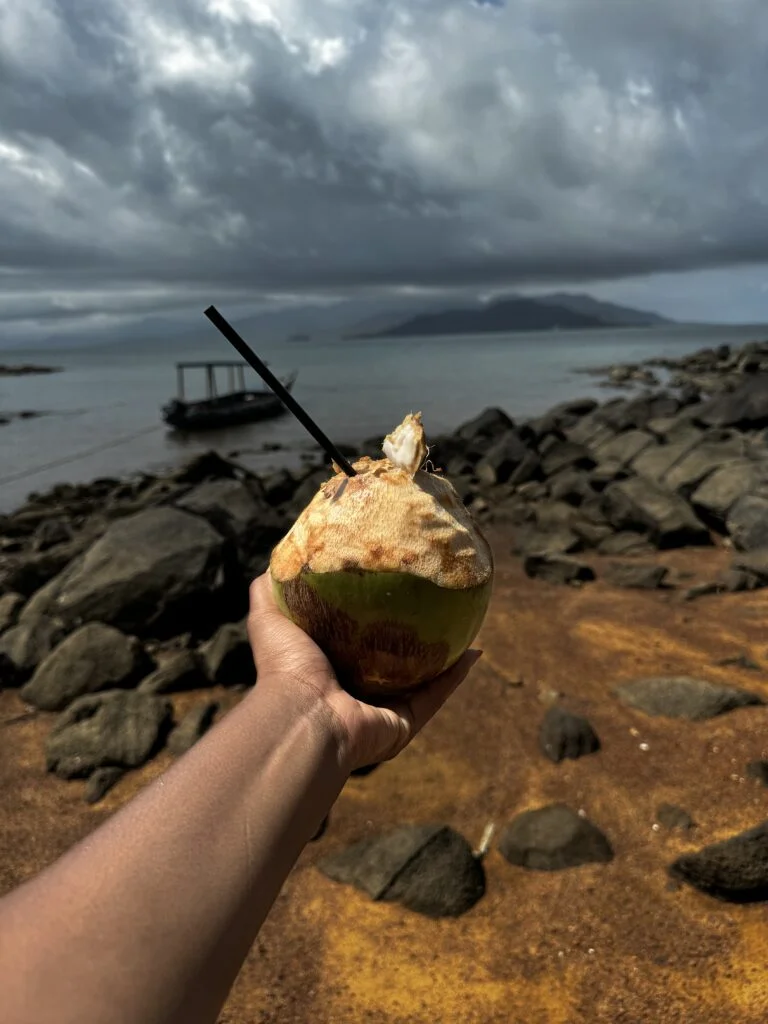
I arrived in Freetown just after sunset. The air was warm and the streetlights had barely flickered on yet — the kind of evening that makes you forget about itineraries and just breathe.
Sierra Leone is still off the beaten path for most travelers, which is exactly why I love it. Here are the stops that stayed with me, plus a few practical notes so you can plan without the guesswork.
Freetown — Your Starting Point
{{image:img_03.jpeg}}
The capital is where most trips begin. I spent my first morning wandering through markets that felt more like living archives than shops — colourful fabrics stacked beside fresh spices, handmade crafts sitting next to produce still warm from the fields.
There are museums worth a stop too. Some deal with the heavier chapters of Sierra Leone’s past. Others celebrate what the culture is today, in all its energy and warmth. Our guide told us the nightlife comes alive after dark — we missed it that night, but I’d go back just for it.
Take a Cooking Class
I always believe food reveals more about a place than any guidebook can. So of course I signed up for a cooking class in Sierra Leone. You learn to make authentic dishes, yes — but what stays is the feeling of being handed a recipe and a story at the same time.
Contact Susan Senesie at info@susansenesie.com for details on her classes. Fun fact: she cooks for Idris Elba when he’s in Sierra Leone. Enough said.
Bunce Island — Where History Stands Still
One of the most powerful moments of my trip was standing on Bunce Island, a former major slave port. Countless Africans were taken from their homes here and shipped across to the Americas. The weight of that history is impossible not to feel.
You’ll need a guide to visit — the historical details are rich and worth hearing properly. For me, it was a quiet reminder of resilience I carry in my own family story.
River Beach #2
I wasn’t sure what to expect from a beach in this part of West Africa. River Beach #2 surprised me — soft white sand, clear water, views that make sitting still feel like the right thing to do.
If you’re staying near Tokeh Beach, The Place Resort was our favourite hotel of the trip. Worth mentioning.
Banana Island — Turquoise Water and Grilled Seafood
{{image:img_06.jpeg}}
Tall palm trees, hammocks strung between them, and the smell of freshly grilled seafood on warm air. That’s Banana Island.
We spent our days there boating along the coast, snorkeling among coral reefs, hiking through rainforest trails, and learning about this former slave port island. The meals at Bafa Resort were some of my favourites — I’d book dinner here again in a heartbeat.
One thing: bring strong sunscreen. The sun is intense here, no exaggeration.
Tacugama Chimpanzee Sanctuary
{{image:img_07.jpeg}}
I thought we’d trek alongside the chimps the way they do on gorilla treks in Uganda. Turns out that would be a terrible idea — these chimps are rowdy, and up close is a different experience entirely.
They share 99% of our DNA, and watching them play and interact felt like looking into a mirror. It was one of those quiet reminders that we’re all part of the same natural world. Tacugama’s conservation work here deserves recognition — they’ve created a genuinely safe space for these animals.
Things to Know Before You Go
Visa and passport. US citizens need both a valid passport and a visa. UK and EU passport holders should check requirements with their local embassy before booking — processing times vary. Give yourself plenty of time for the visa.
Yellow fever vaccine. Required on entry. Get vaccinated at least 10 days before your trip.
Currency. The local currency is the Leone (SLL). US dollars are widely accepted, but carry cash — card payments are often unavailable. Converting dollars to SLL gives you better value.
Language. English is the official language. Kriol is widely spoken day to day. You’ll manage fine in English, but a few Kriol phrases go a long way.
Best time to visit. The dry season runs from November to April. I went at the start of rainy season — there were showers, but they passed quickly and never ruined a day.
Health. Consult your doctor about malaria medication before you go and bring plenty of mosquito spray.
Pack for heat. Sunscreen, a hat, and a portable fan are all worth the luggage space.
Safety. Exercise caution and keep valuables out of sight. I’d recommend traveling with a guide — Sierra Leone’s tourism infrastructure is still developing, so solo travel is possible but not ideal for most visitors at this stage.
Sierra Leone is a country of contrasts. Natural beauty meets history that runs deep. It’s the kind of place that challenges what you think you know about West Africa — and leaves you with memories you don’t quite put into words until weeks later.
Frequently Asked Questions
Do I need a visa for Sierra Leone?
Yes, US citizens need both a passport and a visa. UK and EU travelers should verify requirements with their embassy — rules can change.
What’s the best time of year to visit?
The dry season (November through April) is ideal, but early rainy season works too. Showers tend to be short.
Is Sierra Leone safe for solo travelers?
Solo travel is possible, but I’d recommend going with a guide at least initially — the tourism infrastructure is still growing and having local support makes navigation much easier.
A note from Luna: I once thought Africa was one big destination. Sierra Leone taught me it’s a collection of small, quiet moments that add up to something you carry with you long after the suitcase is packed away.