
The plane touched down at 5.15pm and I was already driving into the dark. The rental car key still warm in my hand, headlights cutting a thin line through a sky that had gone from grey to black somewhere over the Atlantic. I’d planned this trip for months and stood there at Keflavik thinking: no snow, no lights, just me, a 45-minute wait for a suitcase, and 8 nights ahead of me in a country that was, by the books, the opposite of ready for a visitor.
It was ready. It was just ready in a quieter way than I expected.
Before you go: what Iceland in winter actually feels like
Iceland in January is not the freezing wasteland I imagined. During our late January trip, temperatures ranged from -3ºC to 4ºC — about average. But the wind changes everything. Pack layers like you mean it, because you’ll be outside almost the whole time, and a waterproof jacket and boots are non-negotiable. We brought microspikes for icy trails and didn’t need them, but I’d still bring them; one slip on a lower trail at a waterfall and your day changes tone.
Daylight is the real thing to plan around. At the start of January, Reykjavik gets 4.5 hours of sun. By the end of the month it stretches to 7 hours — sunrise around 10.10am, sunset around 5.10pm. Add civil twilight and you get roughly an hour more usable light at each end of the day. Check the times on Time and Date before you go. And the upside nobody warns you about: the light itself. Low, golden, all day long. It’s the reason I’d go back in January specifically.
On driving: we stuck to the south, where roads are more likely to be clear in winter. The full Ring Road in winter is a different commitment — roads can close. Before each morning, check conditions on Umferdin or the Faerd & Vedur app. A regular car is fine for this route; we rented a compact SUV from Europcar at the airport just in case, and had no problems. I book cars through Booking.com after comparing deals. And one app that earned its place in my phone: Parka, for paying parking at attractions that don’t have machines. Expect to pay around 1000 ISK ($8 / £6) almost everywhere — this route had no entrance fees except hot springs.
If you’re chasing the aurora, use the Aurora app to check sky conditions. We didn’t see them on this trip (we did in Westfjords, in September), but rural accommodation gives you a better shot than the city.
The trip at a glance
8 nights, late January into early February. Self-catering everywhere except the last night in Reykjavik. We deliberately stayed away from towns — fewer lights, more sky, more time at the water.
Where we stayed
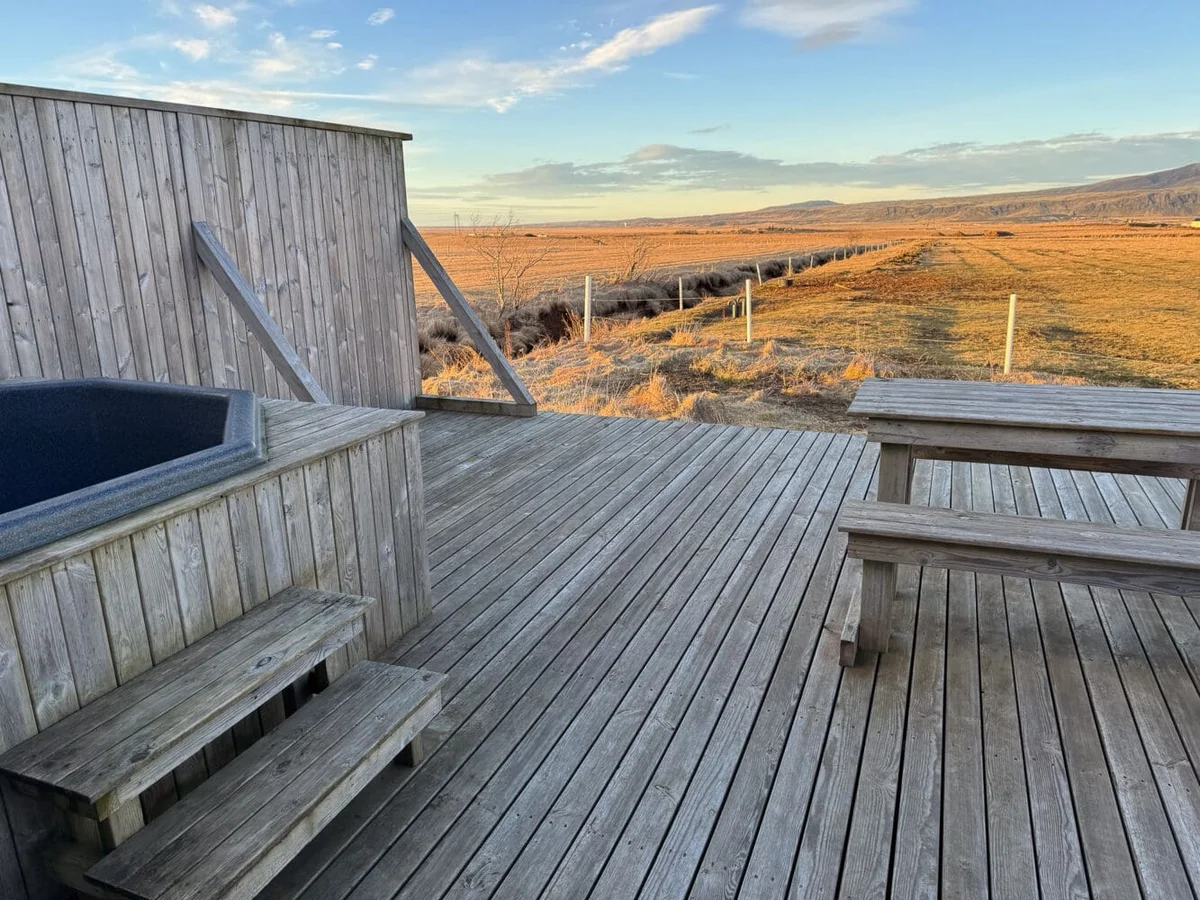
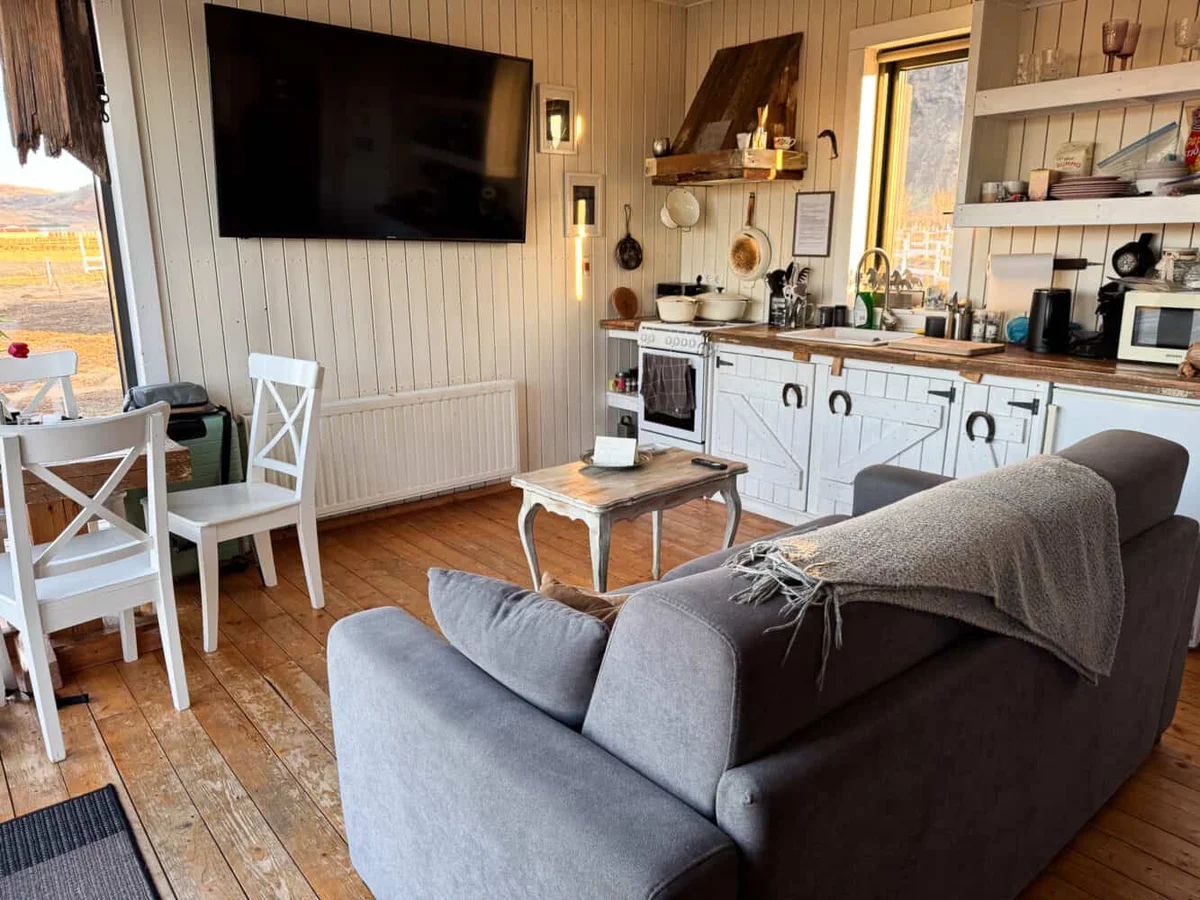
- Near Selfoss (Golden Circle) — Akurgerði Guesthouse, 3 nights. A one-room cabin on a horse farm between Hveragerði and Selfoss, with a hot tub on the terrace. The decor was old wood, farm equipment, horse details everywhere. I loved it.
- Near Skaftafell (South Coast) — The Potato Storage, 2 nights. A family-run guesthouse with apartments in an old potato shed. Ours was the one-bedroom at the front with mountain views. Ten minutes past Skaftafell, 40 minutes before Jökulsárlón.
- Near Vik (South Coast) — Black Beach Suites, 1 night. A modern studio 5 minutes from Reynisfjara.
- Hvammsvik Nature Resort, 1 night. A one-bedroom Artist Lodge chalet with fjord views. Pricey. Worth it. We wished we had more nights.
- Reykjavik — Guesthouse Galtafell, 1 night. The cheapest double ensuite in the centre with street parking. Fine for one night. Noisy plumbing above us. I’d book differently if I went back.
We booked everything about five months ahead through Booking.com. Winter isn’t as quiet as it used to be — the owner of Akurgerði told us she’s almost always fully booked year-round. Airbnb is worth a look too if you want self-catering.
Short on time? With 7 nights, I’d cut a Golden Circle night, or drop Hvammsvik if hot springs aren’t your thing or the budget is tight. With 5 days, I’d skip the Skaftafell area and Hvammsvik — 2 nights Golden Circle, 2 in Vik, 1 in Reykjavik. It’s doable, but some days get long and involve driving in the dark, which I wouldn’t recommend if winter roads are new to you.
Days 1–3: the Golden Circle, slowly
Day 1 — airport to the Golden Circle. Keflavik to Akurgerdi is 96km (60 miles), about 1 hour 20 minutes. We landed at 5.15pm, spent 45 minutes on immigration, suitcase, and the rental car, then stopped at the Krónan supermarket 10 minutes away — good selection, including vegan options. Cabin by 7.30pm. Frozen pizza. A good night ends simply.
Day 2 — waterfalls and geysers. We were out from 10.30am to 5.30pm, doing the Golden Circle at our own pace rather than on a tour bus. We started at the far end and worked back.
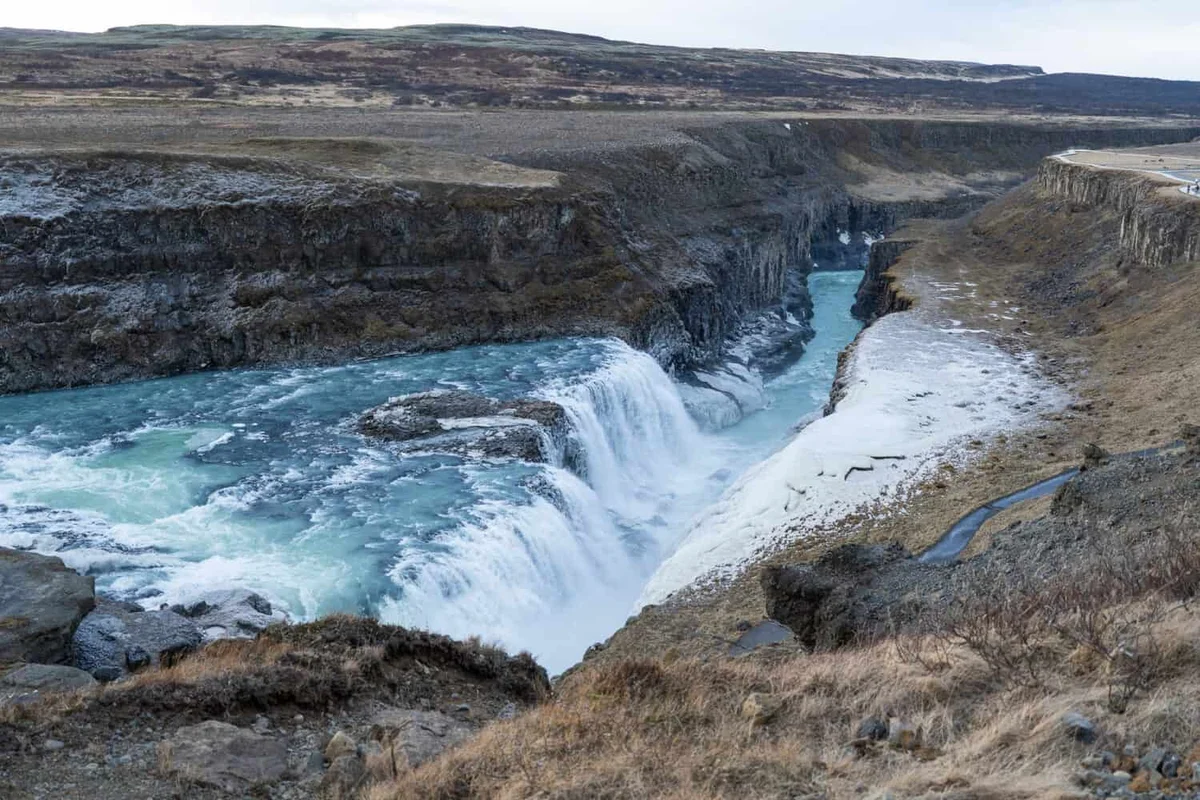
Gulfoss first. It’s huge — multiple cascades in the river — and the most dramatic of the 12 waterfalls we visited (it came third in my personal rankings). Free parking, a 5-minute paved walk to the upper viewpoint. We spent about 30 minutes moving between viewpoints in the wind. Then lunch in the café: a panini, apple pie, hot chocolate. Not crowded, which I appreciated.
Ten minutes back down the road: the Geysir area. Steaming ground, hot streams, bubbling pools. Strokkur erupts every 10 minutes or so, and it’s a lottery how big each one is. We watched three. Parking was 1086 ISK via Parka. Easy, fun, done in an hour.
Faxafoss was the quiet one — we had it to ourselves. Parking is 900 ISK, paid to an attendant at the entrance (card works). A few minutes’ walk to the upper viewpoint, maybe 5 minutes down to the water, and you can get right up to the wide, powerful falls, sheltered from the wind. No toilets, café closed. Go before the buses do.
The day ended at Laugarás Lagoon, which opened in 2025. We got in without a booking at 2.45pm. Modern facilities, two levels of large pools, a swim-up bar, a waterfall, sauna, and a cold plunge pool. I kept alternating between the two. More of a place to sit and watch the river than to swim. The perfect end to a long day. We walked back to the cabin to cook.
Day 3 — Icelandic horses and Thingvellir. Staying on a horse farm, a ride was unavoidable. Sabine, the friendly owner of Akurgerdi Farm, took us out for a private hour-long ride — 20,000 ISK per person. The horses were extra fluffy in winter, and she was happy for us to tolt (that unique Icelandic gait) and gallop, not just nose-to-tail. The scenery did the rest.
After lunch in the cabin, we drove to Thingvellir National Park, 105km (65 miles) out and back. It’s a UNESCO site where the first parliament met in 930AD, and where the North American and Eurasian plates pull apart. I did the 5km loop trail to Oxararfoss Waterfall — about 1 hour 15 minutes, most of the major sights in one walk. It’s a tour bus stop, so it’s busy early; you leave the crowds behind a short walk from the first viewing platform. By 3pm it was quiet. I had Icelandic Happy Marriage Cake at the café on the way out. Parking: 1000 ISK, paid at a machine in the visitor centre.
Days 4–5: the south coast, all the way to the lagoon
Day 4 — to Skaftafell. Akurgerdi to The Potato Storage: 289km (180 miles), a full driving day. We were out from 9.30am to 5pm, and I’m glad we left room — every stop takes longer than you think.
Seljalandsfoss at 11.15am was crowded. Winter’s limited light means you can’t start early enough to beat the buses, and we felt it here. The waterfall is dramatic, the path behind it closed in winter. We also walked 10 minutes on a rather icy trail to Gljúfrabúi, a waterfall inside a cave — narrow entrance, a few rocks to stand on. With that many people around, I decided against going in. Parking 1000 ISK, machine.
Skógafoss is 30 minutes further along the coast. Also busy, also spectacular. You can get right up to the base of the falls, and the golden midday light in winter is unreal — we had a perfectly arched rainbow. There are stairs up to the top, but we were watching the clock and skipped them. Parking 1000 ISK via Parka.
Then Kvernufoss, 5 minutes from Skógafoss, and suddenly almost nobody. A 15-minute walk through a field and into a gorge beside a quiet river. The falls sit deep in the gorge; you can get up close and walk behind the water without getting wet. It ended up being my favourite waterfall of the whole trip.
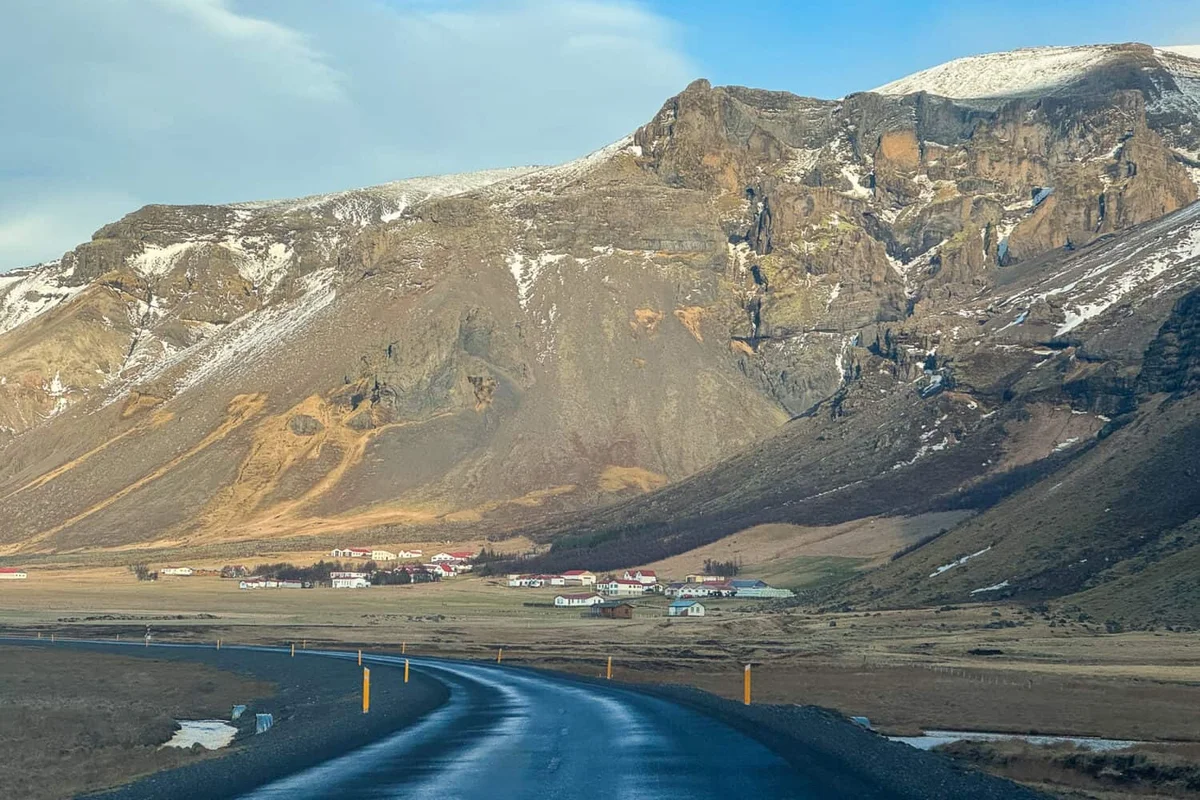
Vik, 30 minutes later: red-roofed wooden church on the hill, coffee and cake at Lava Bakery, a quick walk on the black sand beach across the road. We were passing through — we’d be back in a few days — so we kept moving. The final stretch past the glacier view, the flat lava, the craggy mountains glowing orange at sunset with a full moon above — that’s the day I keep thinking about.
We ended at The Potato Storage: an apartment in an old potato shed, clean, well-equipped, mountain views from the window. The kind of place built for aurora-watching from bed. We didn’t get lucky, but the night was quiet and that helped too.
Day 5 — glaciers and a short hike. The day of Jökulsárlón and Diamond Beach, 118km (73 miles) out and back.
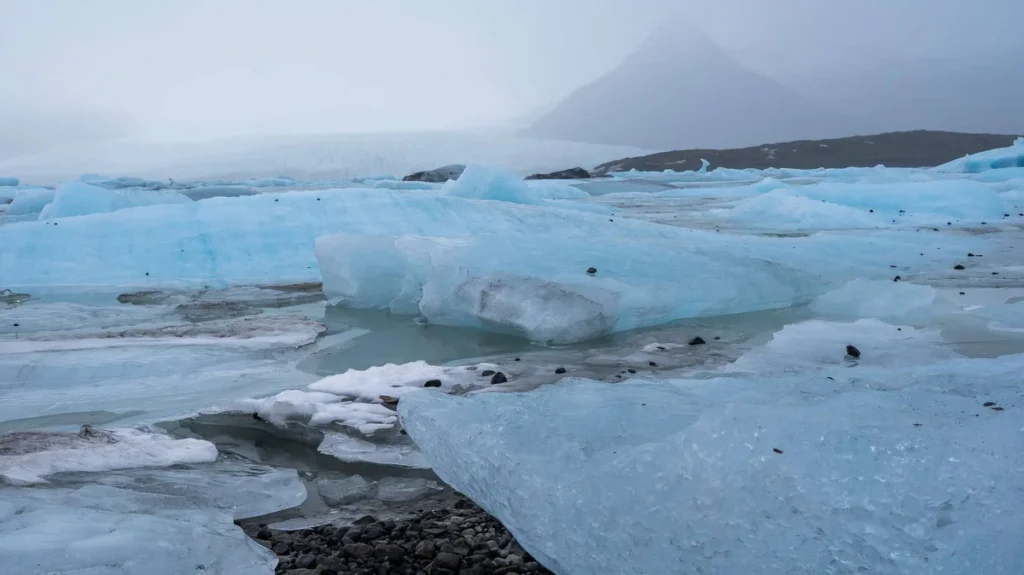
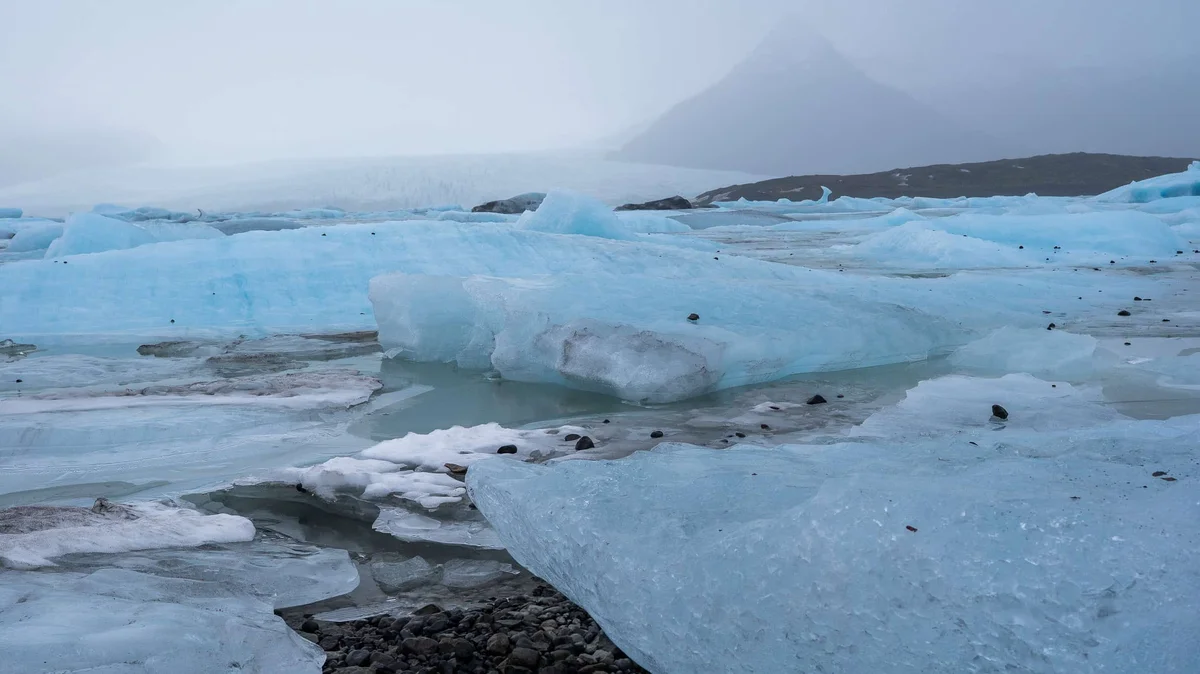
We arrived at the lagoon around 9.50am on a rainy morning — sunrise-ish, a few tour buses, not too crowded. Icebergs in the water in every shade of blue and white, drifting at the edge of the glacier. In winter you can’t kayak, but there’s more ice to see, and the walk along the lagoon to the bridge and over to Diamond Beach is worth it for that alone. On the black sand, icebergs wash up in chunks — some crystal clear, some glowing blue. We stayed longer than I planned and saw a seal in the water. Parking: 1126 ISK via Parka, which also covers the Diamond Beach side.
Then the quiet version: Fjallsárlón, 10 minutes back along Route 1. Free parking, a 5-minute path from the restaurant, and a smaller lagoon where you can actually see the glacier clearly. We had it entirely to ourselves. Rainy, and still magical.
After lunch back at the apartment, 10 minutes to the Skaftafell Visitor Centre (parking 1040 ISK) and one of the shorter hikes: 3.8km (2.4 miles) out and back to Svartifoss, 70 minutes, 178 metres (584ft) of elevation. The ascent is steepish but not hard — we were boiling in our big jackets in the sun. Svartifoss stands inside a wall of basalt columns, and it’s genuinely unique. The trade-off: no glacier views on this route, and longer routes in winter can need spikes.
Days 6–7: back along the coast, and the detour worth it
Day 6 — Skaftafell to Vik. 169km (105 miles) along Route 1, different stops this time. About 6 hours out with everything in.
First stop, 7 minutes from the apartment: Svínafellsjökull. A glacier you can walk right up to, blue ice carved by water, backed by snowy mountains. Free parking, no facilities, a 10-minute walk on a clear path. We had it to ourselves until we left. I still think about that walk.
Lunch in the car at Fossalar, with a view of the river and mountains. Then Stjórnarfoss, a few minutes off Route 1: free parking, no toilets, a gorge setting, and nobody else. Not huge, but peaceful.
Fjaðrárgljúfur Canyon, 5 minutes off the main road. Parking 1086 ISK via Parka. You can see it from the car park, but the best view is a 20-minute walk up the hill, where you also get Mögárfoss waterfall at the far end. Worth the walk.
Reynisfjara: hugely popular, wild, waves crashing into the cliffs. But immensely busy, and you have to be careful — sneaker waves have taken people here, and coastal erosion has made the beach smaller. Parking 1086 ISK. Honestly, this was the one famous sight we could have skipped. We didn’t stay long.
Overnight at Black Beach Suites, a modern studio 5 minutes from the beach, kitchen fine for an easy pasta dinner.
Day 7 — the Hvammsvik detour. From Vik I could have driven straight back to Reykjavik — 2.5 hours. Instead I took a detour an hour north of the capital, 229km (142 miles) of driving with stops, about 5.5 hours on the road.
On the way: Solheimajökull Glacier Tongue (10-minute walk to a viewpoint; you can’t go closer without a guide — nice, but our other glacier days were better, so skip if short on time). Gluggafoss, a 15-minute detour on a bumpy gravel road, my second favourite waterfall of the trip — three tiers, you can walk behind the water on the first, and we were the only people there. Parking 1000 ISK.
A big lunch in Selfoss — pizza at The Old Dairy Food Hall. Then Þórufoss via the 350 and 360: a scenic 50-minute drive past lava fields and a frozen lake. It’s known as the quiet Golden Circle stop, and the car park had two other cars in it. The waterfall was in shadow and the scramble down the rocks felt a lot in the wind. One to try another time.
Hvammsvik was the point of the detour. Eight small pools of different temperatures on a beach overlooking Hvalfjörður, a more natural setting than the paid baths. I cold-plunged in the sea at 3ºC (37ºF) and warmed up in the pools and steam room — bring or rent water shoes, the beach is rocky. Even if the cold sea isn’t your thing, it’s a lovely place to sit at sunset when the mountains go orange.
Our Artist Lodge was a one-bedroom chalet with real artwork inside, fjord and mountain views from the living room, a proper double bed (a rarity in Iceland). No full kitchen — toaster, kettle, coffee pods — but we had toast for dinner and breakfast, and guests get 25% off the hot springs entrance, a 15-minute walk away. Of every place we stayed, this is the one I most want to return to.
Days 8–9: Reykjavik, one last soak, and the flight home
Day 8 — to Reykjavik. 54km (34 miles), 50 minutes. A morning at the hot springs, lunch at the bistro (the vegan coconut soup was good), then the capital. Afternoon wandering: Hallgrímskirkja, Rainbow Street, Harpa, an AeroPress at Reykjavík Roasters, a veggie poke bowl at Pósthús Food Hall for dinner. Simple, close to everything, the right way to end a road trip.
Day 9 — Blue Lagoon, then the airport. 72km (45 miles) with the lagoon on the way. Our flight was at 6pm, so an 11am booking gave us plenty of room. My expectations were low — it’s Iceland’s most popular attraction and we’re not crowd people — and yes, it was busy. But the lagoon is so large you can find quiet spots, and the steam does the rest. The blue water against the moon-like lava landscape, the geothermal plant steaming next door, it’s surreal. Two steam rooms, a swim-up bar (one drink included in the basic plan), a face mask bar with a silica mask included. I spent about 2.5 hours in the water, then a wrap at the casual café — the vegan chickpea and salad wrap was good and big enough to share.
It wasn’t my favourite of the hot springs we did. But with a flight in the evening, it’s the easy, sensible goodbye to Iceland.
The golden hour
If you only get one hour of golden light a day, I’d spend it on the last stretch into Skaftafell — craggy mountains going orange at sunset, a full moon rising, the road empty. That’s the image this trip left with me: not the busiest waterfall, not the famous beach, just the road and the light and the feeling that the whole coast was ours.
FAQ
Is Iceland worth visiting in winter? Yes, if you’re flexible. Lower crowds (tour buses still show up), the chance of northern lights, golden light all day, and the best time of year to see the glaciers. The downsides: limited daylight, browner landscapes, and the real possibility of road closures. If you’re not confident driving on snow, I’d base yourself in Reykjavik and take bus tours instead.
Can I drive the Ring Road in winter? It’s possible, but roads can close. For a first trip, the Golden Circle plus the south coast is the safer, more rewarding route — it’s what we did, and it already felt like plenty.
Do I need a 4×4 for this route? No. A regular car should be fine on the south coast in winter; we took a compact SUV out of caution and it was never necessary. Check road conditions every morning anyway.
A note from Luna
I went to Iceland in winter expecting to be cold and a little miserable, and came home planning to go back. Not every stop was perfect — Reynisfjara was busy, one café was closed, the plumbing in Reykjavik was loud. But the quiet ones — Kvernufoss with nobody around, Fjallsárlón to ourselves, the long drive home with the mountains glowing — those are the ones I keep. Some nights you wait for the lights that never come. Some days the sun does the work for you.