
The ferry out of Baubau takes 30 minutes, and by the time Wamengkoli harbor appears I’ve already forgotten how long the week has been. No crowds, no queues — just blue water on both sides and the smell of the island arriving. This is Muna, and it runs on its own quiet clock.
I’ve spent a few days here between trips to Buton, and I keep coming back to one thought: the best days of travel are the ones where you do very little and it still feels like enough. Muna gives you those days, and then it hands you the sinkholes, the caves, and a jellyfish lake that makes the whole thing feel like a dream.
Here’s what I learned on the water, so you can plan your own slow trip.
Muna at a glance
Who it’s for: slow travelers, swimmers, cave people. Pairs perfectly with Buton.
How long: 2-3 days is a comfortable minimum; 10 days if you’re doing the full Buton & Muna loop.
When to go: May to October is dry season and the sweet spot. I went in mid to late April and the weather was perfect for beaches, boat trips, and swimming holes — the rainiest months, December through February, are the ones I’d skip.
What it costs: Kadena glamping is pricey by Indonesian standards; the two Raha hotels below are 2-star with free breakfast. Budget is easy to keep low.
Getting to Muna
There are three ways in, and the ferry is the one I’d choose.
- Direct flight: Raha (RAQ) has one flight per day from Makassar (UPG), a little under an hour. One flight a day means one missed connection ruins your week, so I’d only fly this if it fits cleanly.
- Fly to Baubau, then ferry: this is what I did. Fly Makassar to Baubau (BUW), then a 30-minute ferry to Wamengkoli on Muna’s south end. Tickets are sold on the spot, and the boat takes cars and motorbikes.
- Fast ferry from Kendari: a big speedboat, twice daily, about 3 hours.
Either way, from Bali or Jakarta you’ll transit through Makassar. I compare flight options on Skyscanner before I book anything else: Skyscanner.

Getting around is simple. The main roads were reworked recently and are in good shape now, and outside of town there’s barely any traffic — it’s one of the easiest places to drive in Indonesia. I brought our driver and his SUV across on the ferry, which was painless. If you’re self-driving, a rental motorbike or car works fine; the good local guides below can also arrange drivers and boats for you.
The Moko lakes: cenotes without the crowds
Five blue-water sinkholes sit within a 1.5 kilometer stretch in central Muna, and three of them are good for swimming. It’s the closest thing Indonesia has to Mexican cenotes — except you might have them all to yourself.
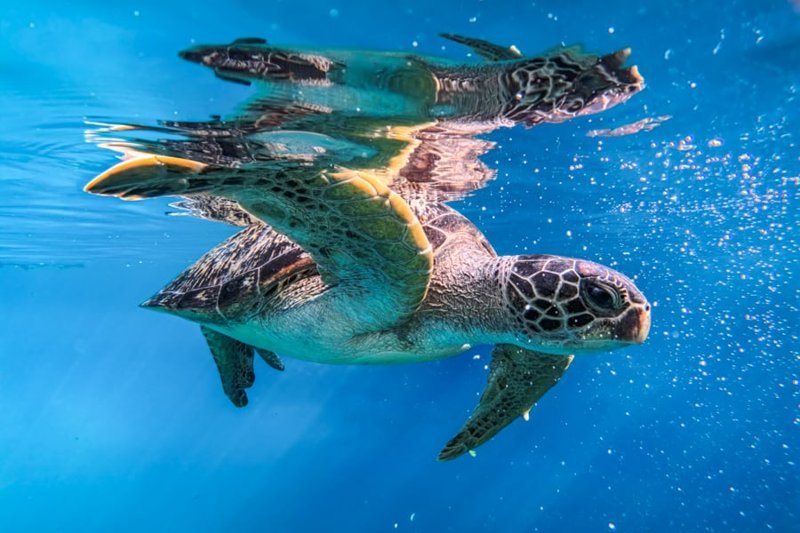
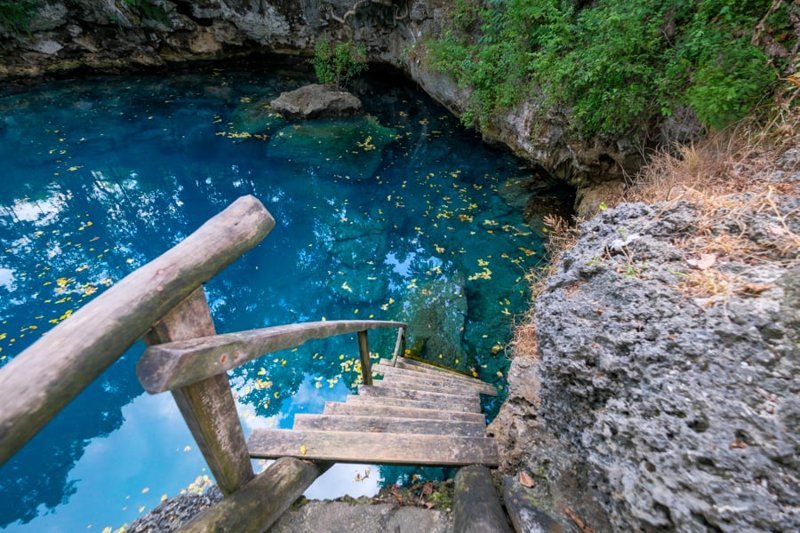
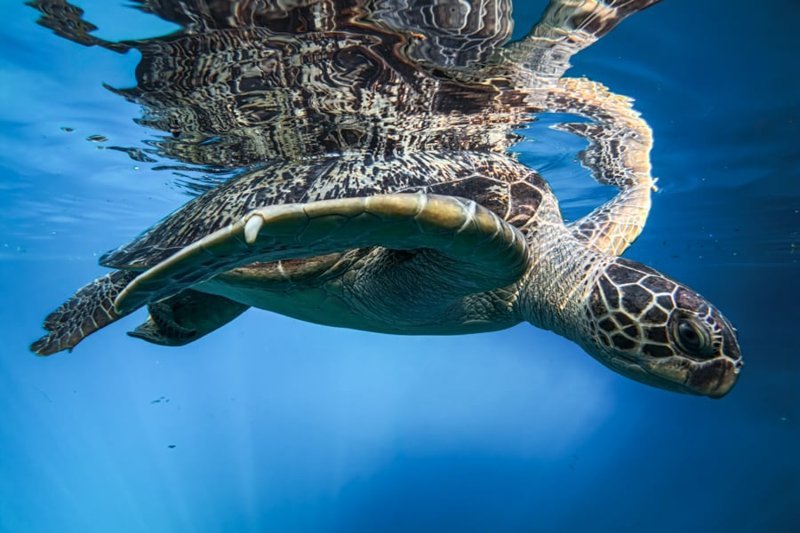
The first lake is the biggest and the easiest: 5 minutes off the main road, with parking right by the water and ladders down. The water is a bright blue that makes a hot day feel solved. A resident sea turtle lives here — brought to the lake as a young one, which isn’t a choice I’d make, but he’s semi-domesticated now and unafraid of people. The locals say he’s been there a long time. Many years, in fact.
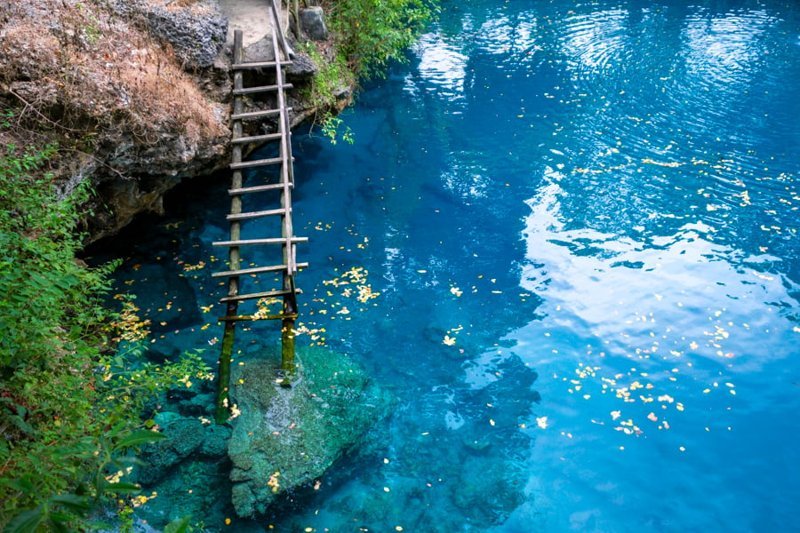
The honesty of this trip: the first lake’s convenience has come with plastic litter — bottles and wrappers on the ground and even in the water. Worth swimming at, worth picking up a bag of trash while you’re there.
The second lake is the one I’d choose. It’s a 300-meter drive from the first, and when we were there it was completely empty. No ladders, just a rocky path to the water, and almost no development at all. The third is similar but bigger, 5 minutes’ drive from the first, jungle-wrapped and pristine. The water is so blue it doesn’t look real.
Napabale boat trip: the tunnel and the jellyfish lake
This is the day I’d put first on any Muna itinerary. The trip starts from a lagoon that looks completely ringed by rock — until you notice the small tunnel the tide has worn through it. We went at low tide, and our boat man slowed the engine, paddled, and we were through in a few minutes. Watch your head. You might have to lie down.
From the second lake the boat crosses to open water and on to Liwu Wandala, a third lake with bright turquoise water that looks like Raja Ampat from above. The whole ride is tame, about 30 minutes.
To reach the jellyfish lake you go ashore and hike — the route we used was about 15 minutes, steep in places, never dangerous. The lake is walled by karst on all sides, and the water is full of two species of stingless jellyfish. Thousands of them, drifting around you as you swim. It’s the closest I’ve come to swimming in a galaxy.
The oldest human art in the world
In the north of the island there’s a complex of karst hills and caves, and two of them are the ones to see: Liang Metanduno and Liang Kabori. Both are within a short walk of the parking area — 5 minutes to Metanduno, 10 to Kabori.
A hand stencil in Metanduno has been identified by researchers as the oldest known human art in the world, at least 67,800 years old. Sulawesi has more prehistoric sites — Leang Leang, Rammang Rammang, Sombori — but this is the oldest discovery so far. Stand inside that cave and you’re sharing a wall with the oldest mark any human has ever left. No museum does that.
Wakumoro pool and Koo cave
Wakumoro is a natural pool in central Muna, clear water under giant trees, and you’ll pass it on the road anyway. Be honest with yourself: it was crowded and littered when I was there. Still, it’s nice, and it doesn’t hurt to stop.
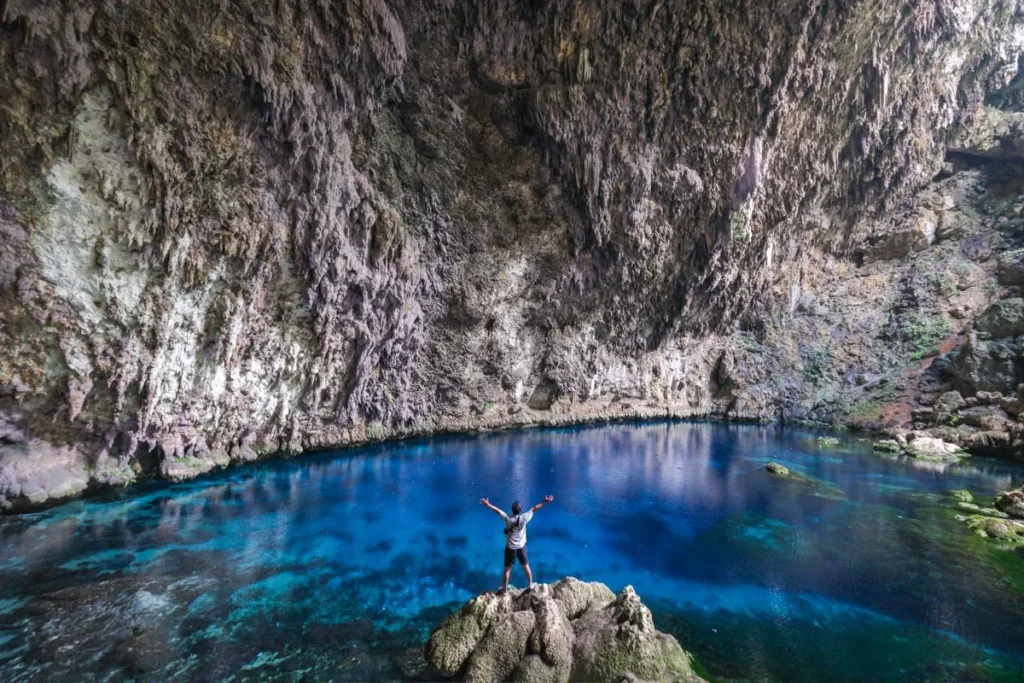
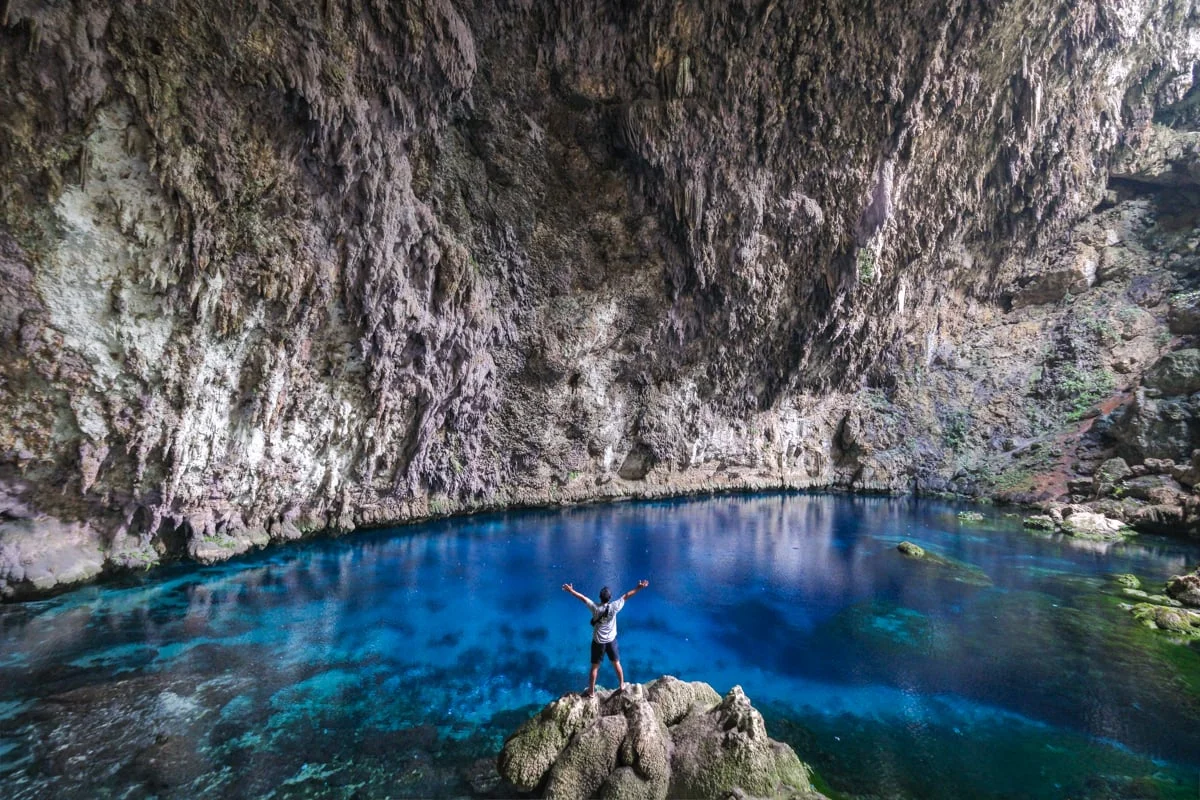
Koo (pronounced Ko’o) is the one that earns its name. A giant cave with two blue pools at the bottom — the first view from above, jungle and stalactites on all sides, takes my breath away in about 5 to 10 minutes on the metal stairway. Going down is another 15 minutes of awkward, slippery footing; I think we each slipped at least once and came up muddy. Do it anyway. Morning light hitting the water makes the blue almost impossible.
The other caves
Laumehe cave — south Muna, a 10-minute walk to the mouth, then a metal walkway down into it. They lend you helmets, because you will bump your head; I did, a few times. The walkway ends before the cave does — the cave isn’t fully explored yet — and reaching that dead end took us about half an hour of walking, not counting photos. The stalactites are the best I’ve seen on the island.
Bidadari cave — close to the road in the south, 5 minutes’ walk down a rocky path. Inside: pools of clear water under an open ceiling that pours sunlight into the cave. A nice easy stop, and it’s on the ferry-crossing day.
Places I ran out of time for, for next time: Inoli Lalibo cave (an even bluer pool, with a steep and possibly dangerous route down), Randano Ghaghe Lake (a remote north-island lake in an impossible green-turquoise), the Bajo villages on the sandbars of the northwest coast (2 hours by car plus 30 minutes by boat — a full day out and back), Kotaeono cave (a lagoon with a cave that leads straight to the ocean, 5 minutes from the road), Wantopi Beach, and Pasi Bungi Lake, a heart-shaped lake in the south that seems made for drone flights.
A 10-day Buton & Muna itinerary
Most people do Muna together with Buton, its neighbor, and this is the shape I’d follow — it’s close to the 10 days I actually spent there.
- Day 1 — Baubau: Wameo market, Malige palace, the sultanate fortress, Lakeba beach, a short boat hop to Batu Buti rock, sunset at the beach.
- Day 2 — Boat trip to Siompu and Liwutonkidi: Napa Sangia beach, the cliff viewpoint hike, a detour to Buata beach.
- Day 3 — Southern Buton by boat: Sampolawa river, Lasoka beach, Karamba floating restaurant, Lakadao beach.
- Day 4 — Samparona waterfall trek — two big falls and a bat cave; swim at the base if your legs hold up.
- Day 5 — 2-hour drive to northern Buton: pick two of Lantangahi, Lapangan, or Kandawu Ndawuna. You’ll need trekking and route-finding, so two is the honest number.
- Day 6 — Bukit Wakoea viewpoint, Rongi traditional village, a swim at Bahari beach, Nirwana beach on the drive back.
- Day 7 — Morning ferry Baubau to Wamengkoli. Quick stops at Bidadari and Kotaeono caves, then drive north to the Moko lakes and swim.
- Day 8 — Napabale boat trip and the jellyfish lake, then the prehistoric art at Liang Metanduno. Wakumoro pool if the day allows.
- Day 9 — Boat day to the Bajo villages on the northwest sandbars.
- Day 10 — Koo cave and the blue pools at the bottom, then Laumehe cave. Ferry back to Baubau to finish.
Where to stay
Almost everything in Muna is in Raha on the north end. The one exception is the reason I stayed south.
- Kadena Glamping Dive Resort — where I stayed. A glamping resort for cave divers near Wamengkoli harbor, with a cave behind it. Pricey by Indonesian standards, but the location earns it if you’re crossing the ferry.
- NES Inn Hotel — currently the nicest hotel in Raha, a 2-star with free breakfast.
- DJ Hotel — if I was traveling solo in Raha, this would be a top choice: another 2-star with free breakfast.
Practical notes from the road
- ATM — they exist but are scarcer than in Buton and less reliable. Raha in the north and Lombai in the south have them.
- WiFi — don’t count on it. Ours worked in the hotel lobby and nowhere else.
- Cell — Telkomsel covers the island well; I could text on boat rides in the north.
- Rides — Maxim works in Raha; I’m not sure about Grab or GoJek.
- Malaria — a 2025 BMC Medicine study reports it’s been majorly reduced on the island. I skipped pills and just avoided bites; the only mosquitoes I found anywhere were in our hotel room. Ironically.
- Conservation — the plastic litter at Wakumoro and one of the Moko lakes disappointed me, so we picked up trash at every stop, guides included. Bring a bag. It adds up.
Guides I can recommend from my own time there: Aspin Chatilombuz arranged everything for our trip and answered every question before we flew — WhatsApp +62 823-7286-6231. Laode Ibnu Rajab, his partner, was our guide on the ground for the caves and waterfalls — WhatsApp +62 822-3921-1302. And Mario Kojongian of Sulawesi Eco Adventure runs tours across Buton, Muna, Wakatobi, Labengki, and Sombori — WhatsApp +62 821-9590-1528.
For the full Buton side of this trip, my guide lives here: Buton Island Travel Guide.
FAQ
Is Muna safe to visit solo?
It felt easy. Roads are good, traffic is light, and the guides and drivers I used were all friendly and professional. The cave descents are the only real physical challenge, and you can skip any of them.
Can I do Muna without a driver?
Yes. Rent a motorbike or car and drive yourself — the main roads are in good condition. The boat trips (Napabale, Bajo villages) are the one thing you’ll want to arrange with a local guide.
How do Muna and Buton compare?
Buton is the bigger destination — waterfalls, exotic beaches, and the easier airport. Muna is quieter, better for swimming in its sinkhole lakes, and has the jellyfish lake and the world’s oldest cave art. Do both; the 30-minute ferry between them makes it easy.
The Golden Hour — early morning at Koo cave, before the day-trippers arrive. Sunlight hits the water at the bottom of the cave and the pool turns a blue that has no name.
a note from Luna: I booked the quiet island and got exactly that. Not every day was perfect — there was litter where there shouldn’t be, and a few slippery cave floors — but I’d fly back tomorrow for the jellyfish lake alone.