
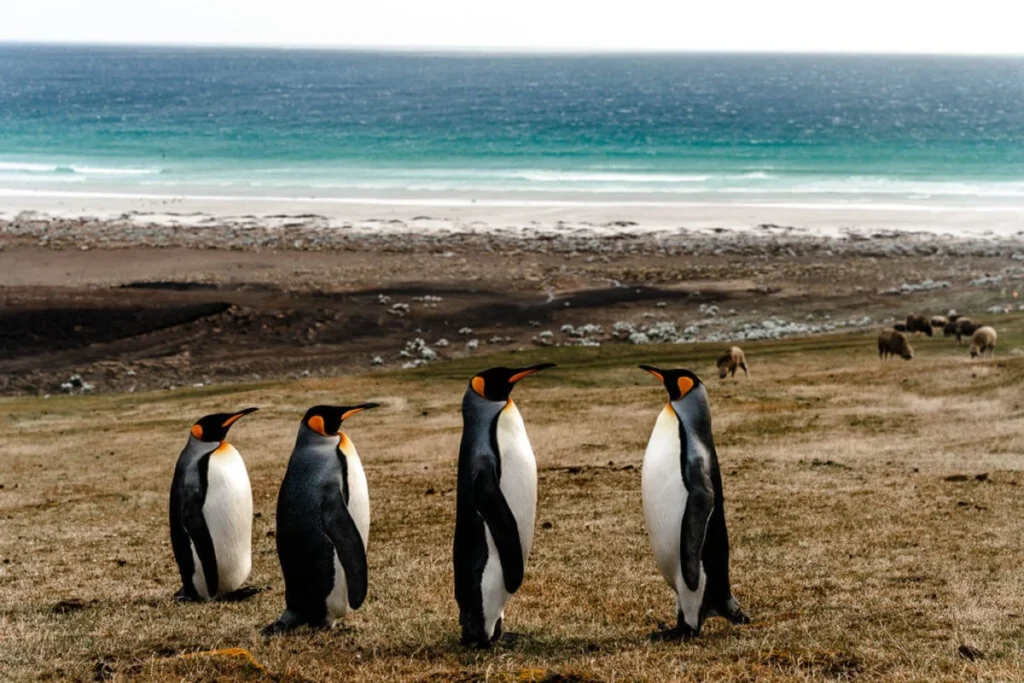
Most travelers who go to the Falkland Islands arrive on a cruise ship, watch the penguins from a tender, and leave before dinner. I went independently, and that turned out to be the whole point. For hours — sometimes a whole day — I sat in the wilderness with thousands of birds and seals, and no one else in sight.
It is not an easy trip to organize. The archipelago is remote, the infrastructure is limited, and the weather has opinions. Plan it several months ahead, assume your schedule will bend, and the islands will give you more quiet than you can probably handle.
The islands in a nutshell
The Falkland Islands are a remote archipelago in the South Atlantic, around 400 km off the coast of southern Argentina and 1,600 km from Antarctica. Roughly 3,500 people live there, most of them in Stanley, the capital. The rest are scattered across small settlements and farmhouses.
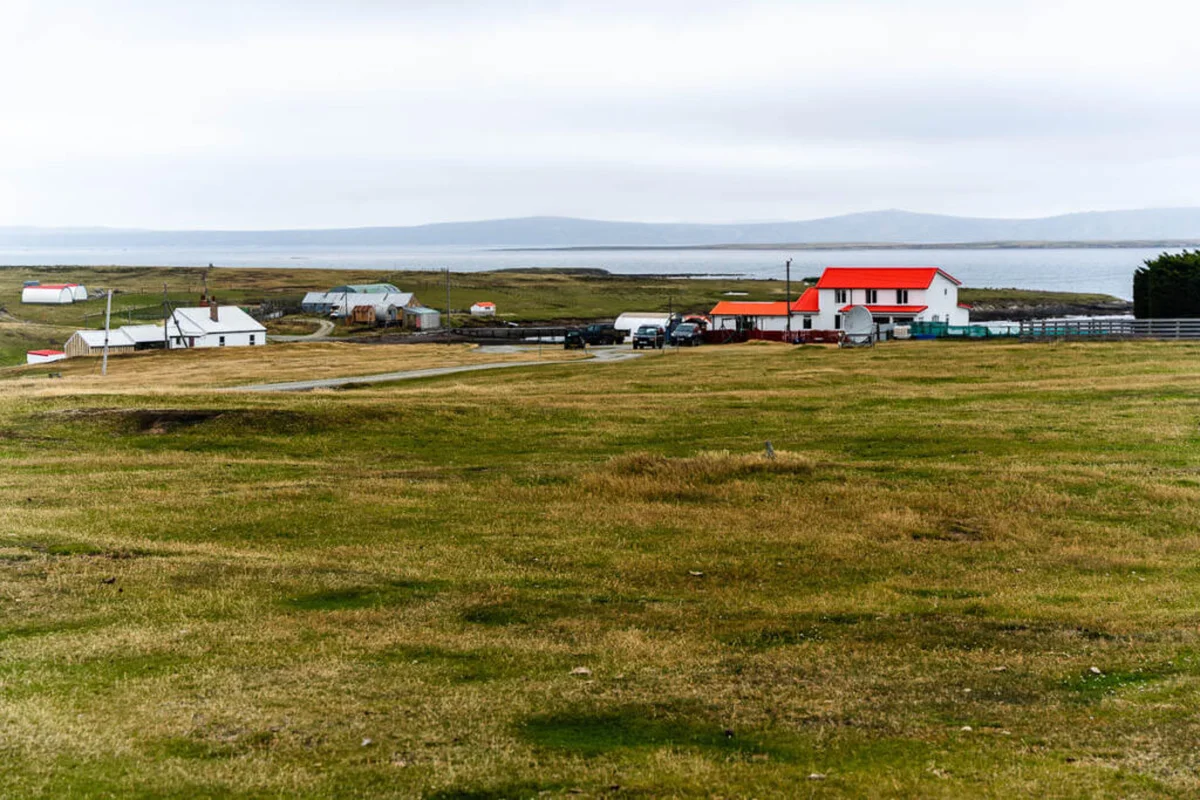
Politically, the islands are a British Overseas Territory, though Argentina — and every Spanish speaker — calls them the Islas Malvinas. The dispute dates back to the end of Argentina’s colonial period; Argentina declared independence from Spain in 1816 and claimed the islands with it. Britain took over in 1833, and in 1982 the two fought a 10-week war over them. In practice, Falklanders are British and want to stay that way, so the status is unlikely to change.
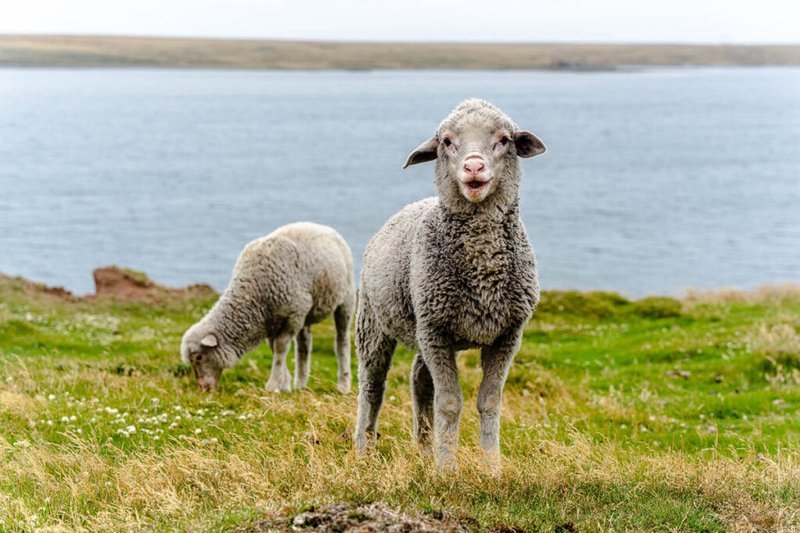
One thing that has not changed: sheep wool is still one of the islands’ biggest exports, and the sheep outnumber the people by a wide margin.
At a glance
- Best time: October to March (southern-hemisphere summer), when the wildlife is around
- Getting there: LATAM from Santiago (around 500 USD return) or the RAF flight from the UK (£2,200 return)
- Getting around: small FIGAS flights between islands (£288 return to any island)
- Realistic budget: around £4,000 for a full week on the itinerary below, plus food
- Who it’s for: independent travelers who want wildlife without crowds and can live with uncertainty
Visa and insurance
The Falklands have their own immigration rules, separate from the UK’s. The UK’s ETA does not apply to the islands themselves, so most nationalities can enter without a visa. The airport even gives you a separate passport stamp with penguins on it.
One exception: if you fly to or from the UK on the RAF flight, you do need an ETA. It costs £16, is valid for 2 years, and the application instructions are on the UK government site.
Take proper travel insurance with a cancellation policy. This is an adventurous destination, and flights get delayed for days. The backpacker-style plans that cover trekking and other adventure activities are the ones worth getting — I went with IATI Insurance, which covers that sort of thing and had a 5% discount code for readers of the guide I borrowed this from (use your own judgment on where to buy).
Getting to the Falklands
There is no real international airport on the islands. Everything lands at Mount Pleasant Airport (MPN), a Royal Air Force station 50 km from Stanley. You have two flight options.
Option 1: LATAM from Chile
LATAM flies one weekly flight from Santiago via Punta Arenas, only on Saturdays. That means a return from Santiago only works in whole-week chunks: one week, two, three. Fares usually run around 500 USD return, and seats sell out weeks in advance — months in high season — so book early.
Option 2: the RAF flight from the UK
The Royal Air Force runs the other route, twice a week. Inbound flights leave the UK on Wednesday and Sunday; outbound flights leave the islands on Tuesday and Friday. It is a military operation that happens to sell a few seats to civilians.
Booking is a process. It starts with an email to the Falkland Islands Government Office in London — travel@falklands.gov.fk, +44 7984 096726. I sent several emails and never got an answer, then called and got everything right away. Send them the booking form, pay the invoice by bank transfer to a UK account number, and then wait. Confirmation can take weeks unless you chase them by phone.
A return flight costs £2,200. That is a lot, but if you live in Europe you skip the flight to Santiago entirely. The route includes a random two-hour stopover in Ascension Island, a tiny military outpost in the middle of the Atlantic.
Two things to know before you commit:
- Check-in at RAF Brize Norton (30 km west of Oxford) closes 3 hours before departure. It is a military base, not an airport.
- Flights rarely leave on time. Mine was scheduled for 11 pm, and the night before I was told it would leave 6 hours earlier, at 5 pm. I was already in the UK, so I was fine — but if I had booked a flight into London that morning, I would have missed it. Check the RAF website for schedule updates regularly; changes go up at the last minute.
Living with the delays
International flights to the Falklands run late all the time, because the wind. LATAM and RAF both get it. The good news: flights are delayed, not canceled — sometimes for a few hours, sometimes for a day or two, and occasionally they leave early. Build in slack, lower your expectations, and assume your trip could shrink by 2 days or stretch by a few.
Inside the archipelago, the story is different. The small regional flights that connect the islands also run late, but usually by hours, and they rarely cancel — a few times a year, at most — because they are not tied to the military airport’s stricter rules.
Best time to visit
October to March is the season. Outside those months the weather is worse and most of the wildlife has gone, which is why many lodges close in winter. If you only care about the 1982 war sites, the islands work year-round.
And yes, the summer weather is still awful. Not cold so much as extremely windy — that wind is exactly why so many flights wobble.
Money
The Falkland Islands Pound is pegged to the British Pound, except the notes feature penguins. British Pounds are accepted anywhere on the islands. You can pay by card almost everywhere, including on the remote inhabited islands, though some independent local guides want cash.
There is exactly one ATM in the whole territory: at the gas station in Stanley, just outside the Lookout Lodge. Cash planning matters.
Getting around
FIGAS, the air taxi
The best way to see the Falklands is by going out to the remote islands, and the only way there is by small flight. FIGAS — the Falkland Islands Government Air Service — does not run a fixed schedule. It works like an aerial taxi: the day before your flight, bookings are collected and a route is built around the number of passengers and destinations. So you find out your actual schedule only the day before, usually posted on the airline’s Facebook page. Flights get delayed, so on flying day call Stanley Airport for updates — your accommodation will do this for guests every day anyway.
To book, first reserve accommodation on the island — without permission from the family who owns it, you do not get on the plane. Then email operations@figas.gov.fk. They answer quickly, but I would book before you even arrive in the islands. I made my reservations for Saunders and Sea Lion Island about 15 days out. A return ticket to any island costs £288, and you pay by card at check-in.
Renting a car
You can rent a 4WD from about £150 a day for the most basic one. Do you need one? Probably not. The best mainland wildlife spots are off-road and tricky enough that even with a 4WD only experienced local drivers get there, and if you are heading to the islands you do not need a car at all. But with one spare day, a rental is handy for looping the island at your own pace, visiting the war sites, and seeing the larger settlements like Goose Green and Darwin. Falklands 4×4 and Falklands Rental were the two companies recommended to me.
Where to stay
Stanley
Options in Stanley are limited, and most travelers end up at one of two places.
Malvina House Hotel is the best hotel on the islands, around £160 a night depending on the season. It is a nice hotel in a traditional house — nothing exotic — and it is the only accommodation in Stanley with free unlimited Wi-Fi.
Lookout Lodge is where I stayed. Probably the cheapest bed in the islands, at £75 a night for a single room with a shared bathroom, but the facilities are neat, breakfast is very hearty, and the staff are extremely helpful. It is also the easy place to arrange tours.
The islands
Every island is private land, owned by one person or family, who are usually the only inhabitants. Booking a room is how you ask permission to visit. Places are few, so book months ahead, especially for November to January.
Prices depend on the setup. A night at the lodge on Sea Lion Island is £250 per person with all meals included; a basic self-catering cabin is £100 per person.
- Sea Lion Island — the nicest lodge of all the islands. You are a 10-minute walk from elephant seal colonies, penguins, and a lot more. sealion_lodge@horizon.co.fk · +500 32004
- Saunders Island — 30 km long, inhabited by just 4 people. Two cabins outside the settlement: The Neck (more basic, more isolated) and The Rookery (more comfortable, wildlife a short walk away). The Neck is £100 per person, two rooms with 4 beds each, one toilet and a shared space; the Rookery has two twin rooms and costs more. Camping is allowed at The Neck, if you can take the cold and wind. saunders@horizon.co.fk · +500 51297
- Carcass Island and Pebble Island — both take guests; contact them through their websites. Bleaker Island — bleakerisland@horizon.co.fk
Internet
Fiber would have to run through Argentina, so the islands rely on satellite, which is expensive for such a small population. Most cafés and hotels in Stanley charge for Wi-Fi, and it is not cheap — 24 hours at the Lookout Lodge costs £30, and the clock only runs while you are actually connected. On the two islands I visited, Starlink was available at no extra charge. Honestly, treat the trip as a chance to put the phone down.
UK SIM cards and eSIMs do not work. Local SIMs exist but are very expensive.
Eating
Food prices are not far off the UK, and it depends where you go. What is genuinely cheap is alcohol — a pint of beer runs around £3. On the islands you are self-catering, so pack well: on Saunders, if you land without food, the local family sells ready-to-go meals.
A 7-day itinerary, wildlife first
I spent 8 days in the Falklands. Many visitors — Argentinians and Britons especially — are there for the war sites: former battlefields, abandoned arsenals, cemeteries. I was mostly interested in the animals, so this version of the week skips most of that. Day tours to the war sites can be arranged through the Lookout Lodge if you want them.
Day 1 — Arrival at Mount Pleasant
Your flight can arrive at any time, so plan for a slow day. Immigration takes a while, and the bus into town does too. Book the airport bus transfer in advance through Penguin Travel (£22) — otherwise you risk no seat and a taxi at £££ prices.
Day 2 — Stanley and around
Do Stanley at the start of your trip, not the end. Outbound flights get delayed by a day or two, and I met a group who missed their island trip because their flight landed 24 hours late and they had scheduled it for day two.
No more than 5–6 km outside Stanley, within walking distance or a short taxi ride, is Gipsy Cove, home to a colony of Magellanic penguins. A few kilometers east is the Gentoo Penguin Colony. Tour companies charge a few hundred pounds to ferry you there; you do not need them — walk or take a local taxi. Stanley itself has a few pubs; for a properly local one, go to The Rose Bar or Victory Bar. The waterfront has museums, war memorials, the post office, and a few souvenir shops.
Day 3 — Volunteer Point
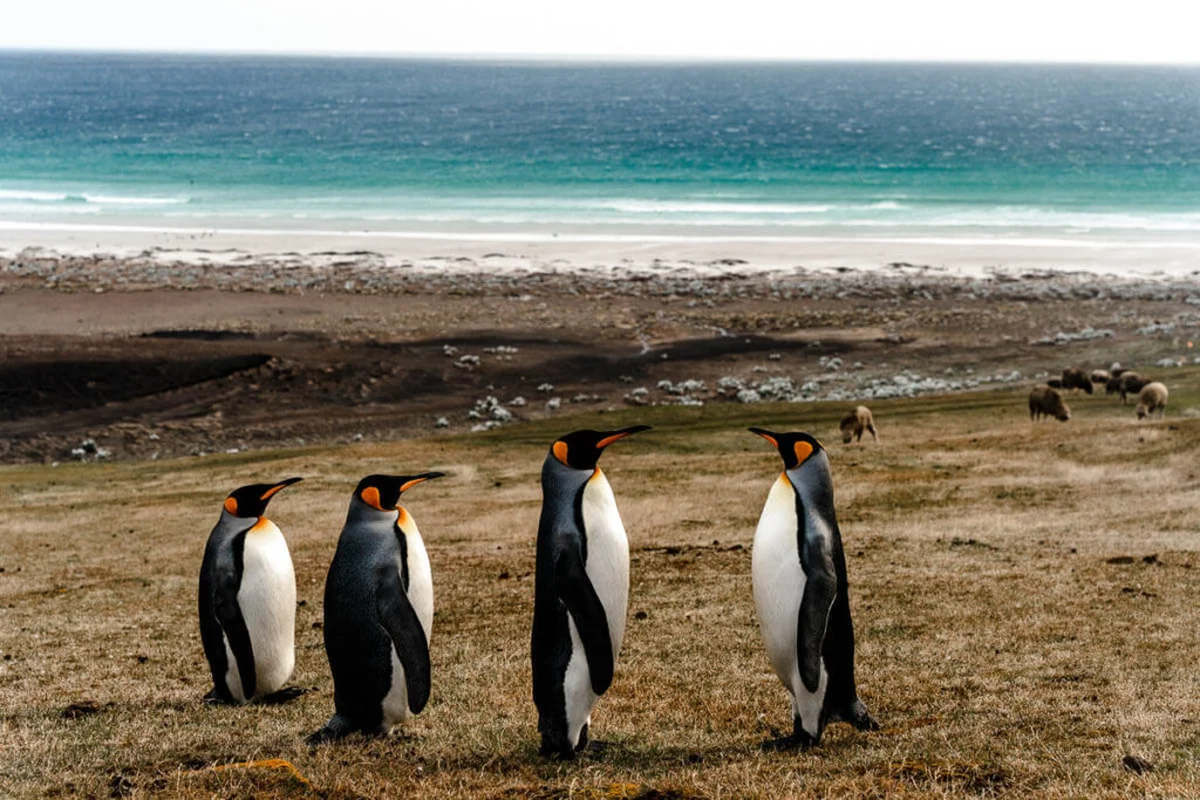
Volunteer Point has the largest colony of king penguins in the islands, with hundreds of breeding pairs on a long white-sand beach, plus gentoo and Magellanic penguins. It has been open to visitors only since 2020 — before that, the area was mined.
Go on a non-cruise day. It is close to Stanley, so it is a popular cruise day trip, and you do not want the crowds or the pushed-back viewing distance. Getting there takes about 2 hours from Stanley. Google Maps shows a road; do not trust it. The road ends at Johnson’s Harbour, and the rest is rough off-road country where vehicles get stuck all the time — everyone recommends hiring an experienced local driver. A car runs around £300, slightly more with extra passengers, and the tour lets you stay with the penguins for up to 4 hours. The Lookout Lodge can arrange it.
Days 4–5 — Sea Lion Island
Sea Lion Island has probably the highest concentration of wildlife on the archipelago: the largest colonies of southern elephant seals, plus gentoo, Magellanic and rockhopper penguins. In November, during breeding season, you will see them in the hundreds, with males fighting, and sometimes orcas approach the shore to feed on pups. I went in the first week of March and still saw plenty of huge males battling, so anywhere from October to March works.
The lodge requires a minimum 2-night stay at £250 per person per night, plus the £288 return flight. It is expensive, and I genuinely think it is worth every pound. Once you are there, you are free to walk the island and find its corners yourself.
Days 5–6 — Saunders Island, then Stanley
This was my favorite place in the whole archipelago. Saunders has the largest albatross colony in the world, the biggest gentoo penguin colony I have ever seen, and plenty of rockhoppers and Magellanic penguins. There are also several dozen elephant seals, reachable on a 20 km round-trip hike from the cabins.
The island is 30 km long and home to just 4 people. The settlement is comfortable but far from the wildlife, so most visitors choose one of the cabins. The Rookery is a two-room cabin with twin beds, a 5-minute walk from the main albatross colony and close to rockhopper penguins. The Neck is rougher — two basic rooms with bunk beds, one bathroom, a shared space — but more isolated. From there you can hike to an albatross and rockhopper colony, you are close to a small king penguin colony and hundreds of gentoos, and the elephant seal spot is only reachable from The Neck. I stayed there completely alone, which was perfect.
It takes nearly an hour by car from the settlement to either cabin — your host will drive you. Bring your own food; if you forgot, the family sells ready-to-go meals.
Day 7 — Departure
Outbound flights usually leave in the morning. Book the bus transfer through your hotel or Penguin Travel the day before.
What it costs
This might be the most expensive trip I have ever taken, and I do not regret a single pound. Hours and days in the wilderness, watching thousands of animals by yourself — you cannot get that anywhere else. A realistic week on the itinerary above, using the RAF route:
- RAF flight, return: £2,200
- 2 nights at Sea Lion Island: £250 × 2 = £500
- 2 nights at Saunders Island: £100 × 2 = £200
- 2 regional flights: £288 × 2 = £576
- 3 nights at the Lookout Lodge: £75 × 3 = £225
- Day tour to Volunteer Point: £300
Total: around £4,000, before food. If you take the LATAM route instead, the flight itself is around 500 USD return, so the total drops depending on how you get to Chile. Food is UK-like in price; a pint of beer is about £3.
The golden hour
The last hour on Saunders, sitting above the albatross colony as the light went low. No one around, the wind in the grass, and a sky the color of a bruise healing. That is the hour to plan the whole trip around.
FAQ
Do I need a visa for the Falkland Islands?
For most nationalities, no — the islands have their own immigration rules and the UK ETA does not apply. The one exception is flying to or from the UK on the RAF flight, which requires an ETA (£16, valid 2 years).
How far in advance should I book?
LATAM flights sell out weeks to months ahead in high season. Island accommodation is limited to a handful of rooms, so book months ahead for November to January. FIGAS island flights: book about 2 weeks before, and confirm your schedule the day before it runs.
Is the trip worth the cost?
If you want wildlife without crowds, yes — nowhere else gives you hours alone with king penguins, albatross, and elephant seals. Budget around £4,000 for a week by RAF, less if you fly LATAM from Chile.
A note from Luna: not every trip is seamless — some of it was waiting at the wrong time for the right flight. But the islands made me a believer that the best travel is the kind where almost no one else is around.
If you are planning a slow trip somewhere else, these are good next reads: a slow travel guide, and my notes on weekend escapes close to home.