
The station clock read past midnight and my train was late again. I ducked into the only open café on the platform, ordered a croissant, and watched steam rise from it like something sacred. That’s when I realized French food isn’t just about what you eat — it’s about how slowly you let yourself live.
This is my guide to 29 traditional French dishes. Not a rushed listicle, but the ones I actually seek out every time I’m there: the comfort bowls on rainy afternoons, the crispy duck legs that shatter like glass, the cheese boards that take up half an evening.
Before You Eat: A Few Things to Know
Navigating a French menu feels intimidating until you know the basics:
- Entrée means starter, not main course.
- Plat is your main course.
- Formule or Prix-Fixe is a set menu — usually lunchtime and excellent value for two or three courses at a fixed price.
- Plat du Jour is the chef’s dish of the day, typically seasonal and fresh.
A quick phrase like “Bonjour” when you walk in goes a long way. And if you ask for une carafe d’eau, you’ll get free tap water — specify bottled only if you want it.
The Essential Dishes
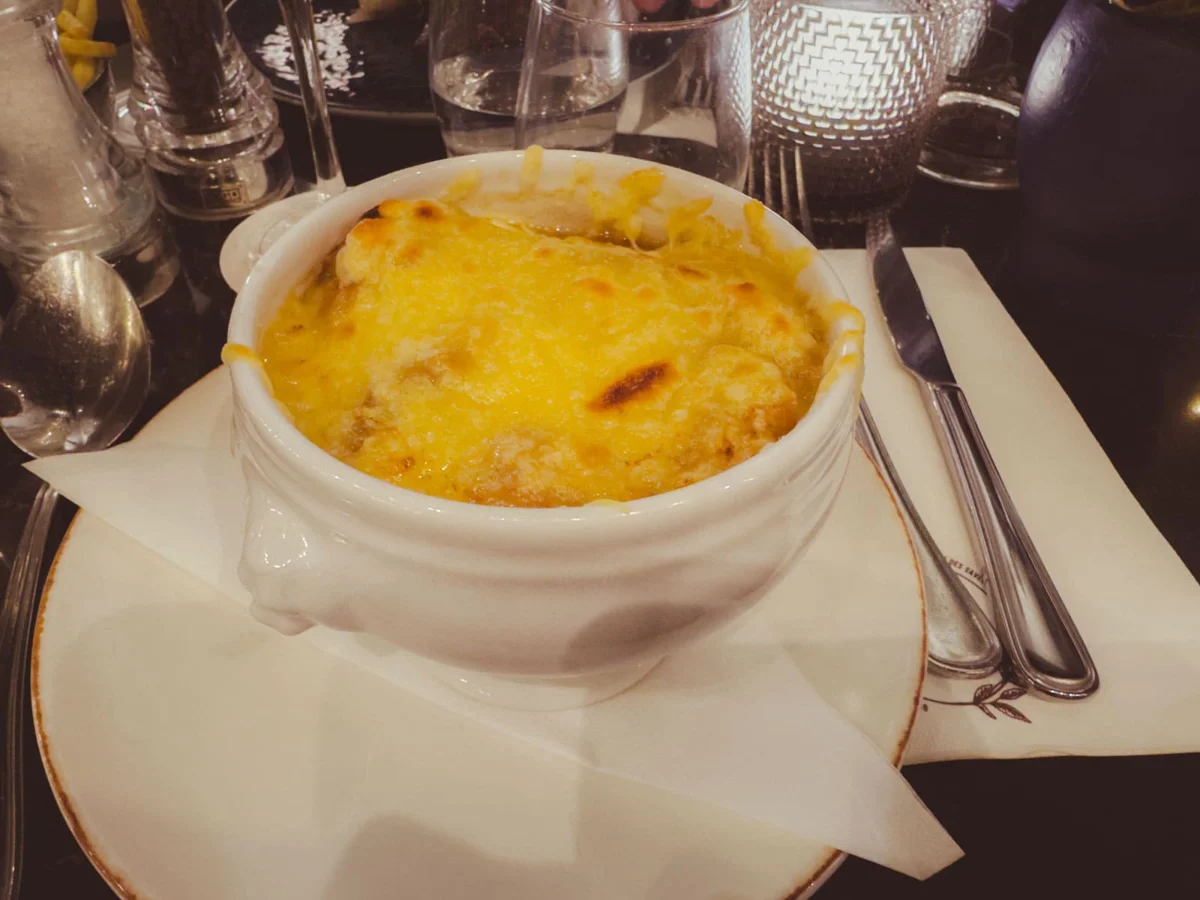
1. French Onion Soup (Soupe à l’Oignon)
I remember a miserably cold afternoon in Le Marais, the kind of rain that soaks through your coat before you notice it. A tiny bistro saved us with a steaming bowl of soupe à l’oignon — rich beef broth, deeply caramelized onions, and a crusty crouton buried under bubbling Gruyère.
A great version has a dark, almost mahogany broth. That’s the sign of onions cooked low and slow for hours. Pale broth means shortcuts were taken.
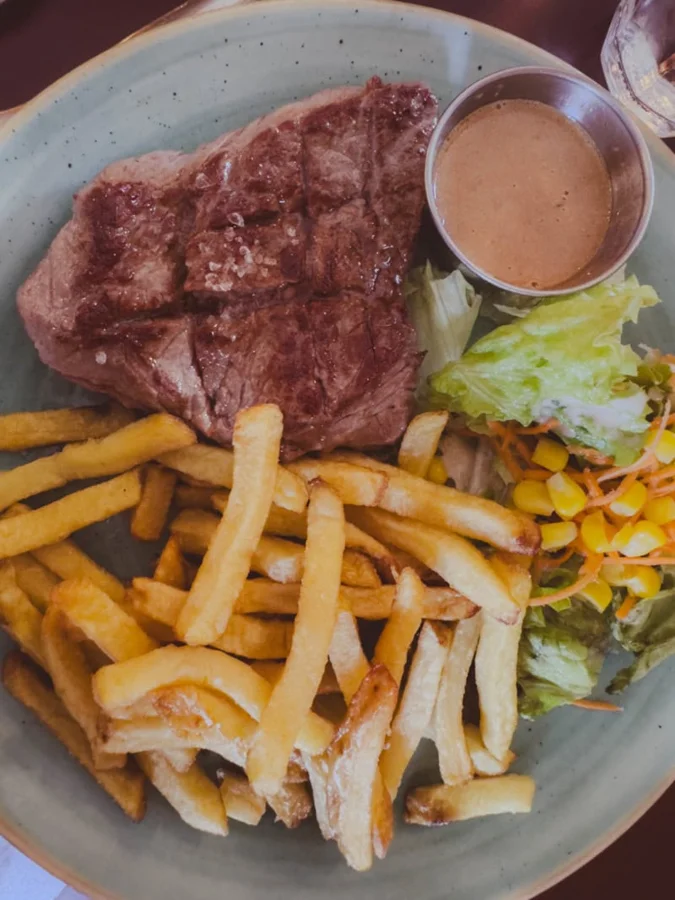
2. Steak Frites
The unofficial national dish of every French brasserie. Simple, honest, and when done right, hard to beat. My favorite memory is a late-night table on a Montmartre sidewalk — steak cooked à point (the French standard for medium-rare), a mountain of crispy frites beside it, the city humming below.
Know your cuisson: saignant (rare), à point (medium-rare), bien cuit (well-done). Le Relais de l’Entrecôte in Paris serves only steak frites — worth the queue.
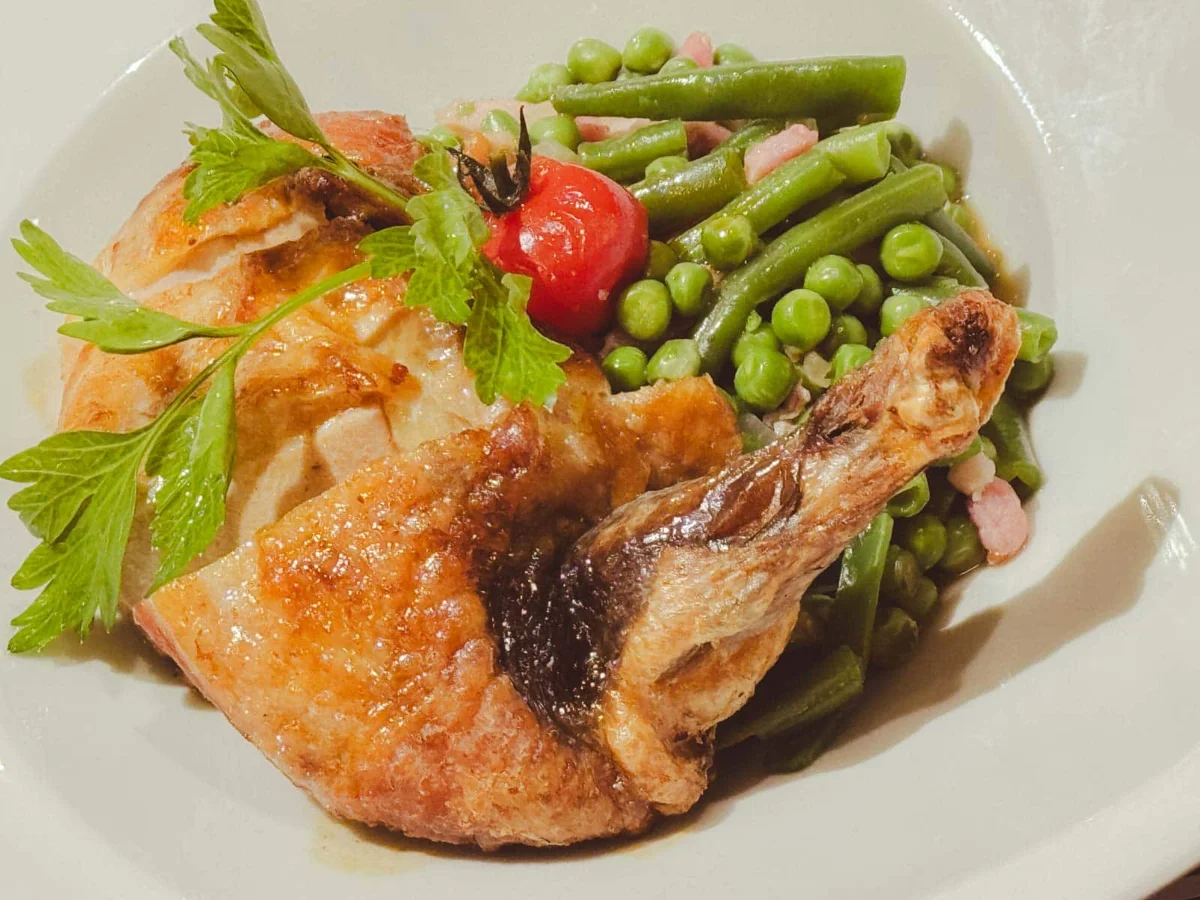
3. Duck Confit (Confit de Canard)
The first time I had a proper duck confit was in the Dordogne, heartland of duck country. The skin shattered like glass beneath my fork, revealing meat so tender it fell away on its own.
It’s slow-cooked in duck fat for hours, then pan-fried until golden. Traditionally paired with pommes de terre sarladaises — potatoes sautéed in garlic and more duck fat. Do not skip this pairing.
4. Escargots de Bourgogne
Eating snails feels like a rite of passage, but one bite of that garlicky, parsley-infused butter changes everything. Use the little tongs and fork, and keep bread close — you’ll want to mop up every last drop.
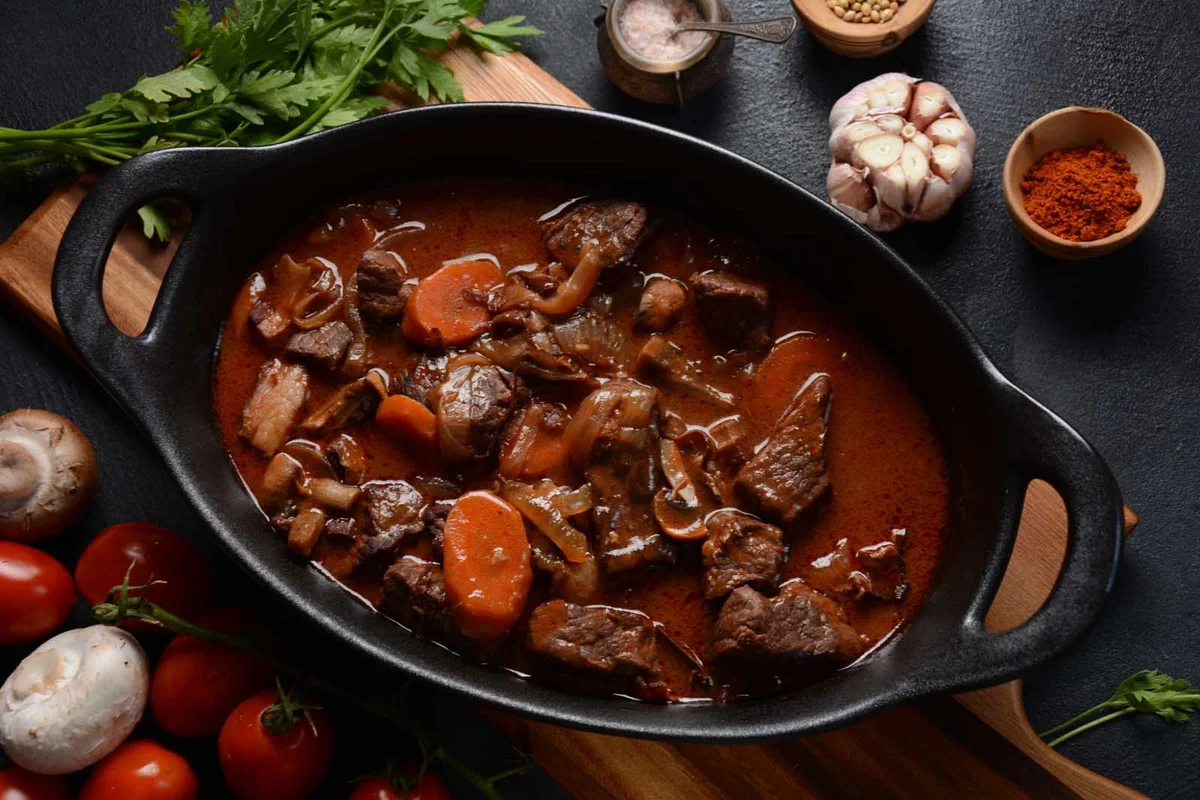
5. Boeuf Bourguignon
I was driving through Burgundy in late autumn, vineyards blazing gold and red on either side of the road, when I stumbled into a tiny auberge near Beaune. The air inside smelled like red wine and slow-cooked meat. It wasn’t just a stew — it felt like a hug from the inside out.
Charolais beef braised in full-bodied Burgundy red with pearl onions, carrots, mushrooms, and a bouquet garni. Look for a sauce that’s deep, dark, and coats the back of a spoon.
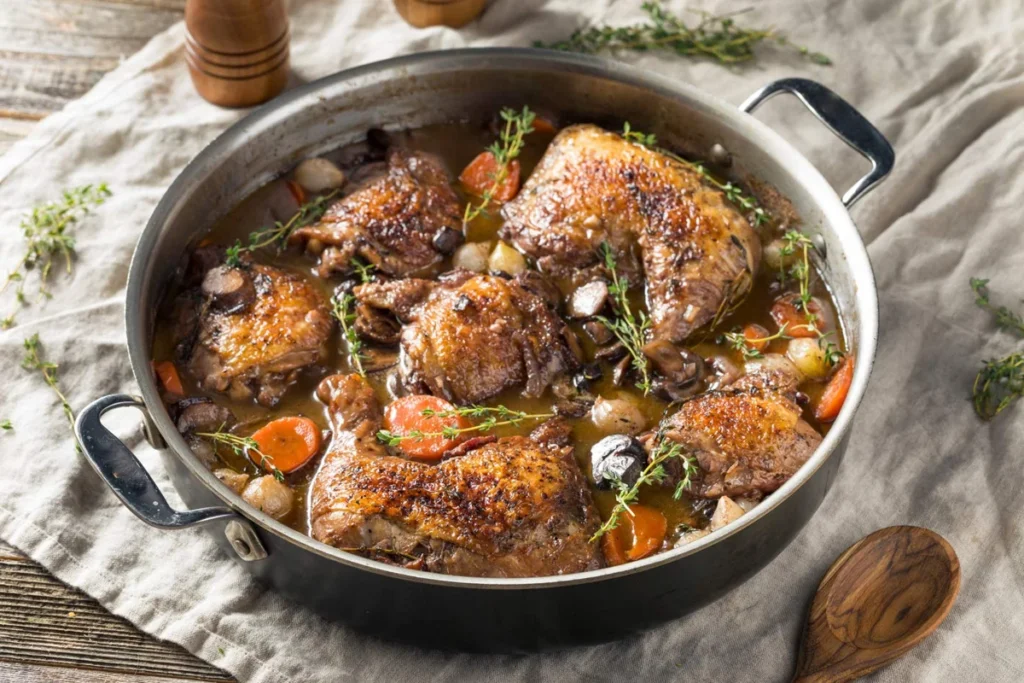
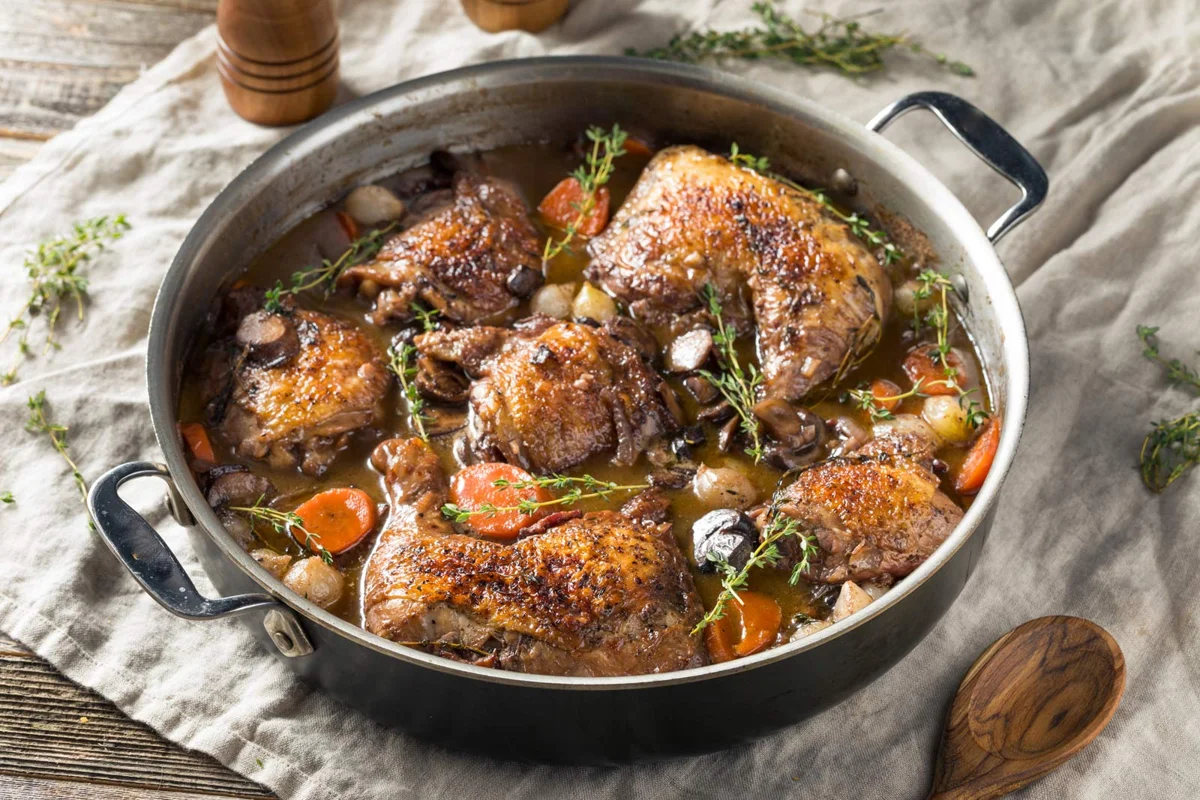
6. Coq au Vin
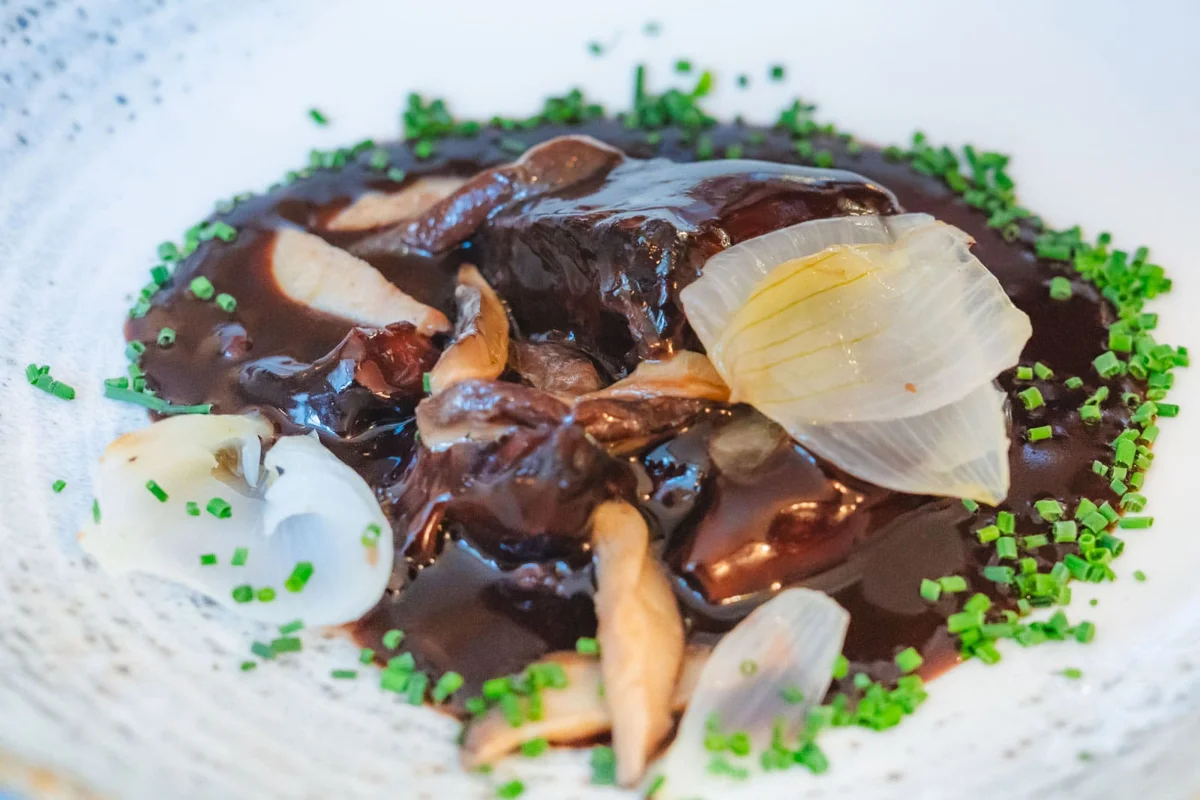
Like its beef-based cousin, this is another iconic stew. I had an unforgettable version in a traditional bouchon in Lyon — the sauce was so dark it was almost purple, which means it simmered for real.
Chicken braised slowly in red wine with lardons, mushrooms, and pearl onions.
7. Cassoulet
Cassoulet is not a light meal — it’s a rich, rib-sticking masterpiece from the Languedoc region. White beans, duck confit, pork sausage, and sometimes pork shoulder, all slow-baked in a clay pot with a crispy golden crust on top.
I shared one in Carcassonne and had to take a long walk along the city walls afterward. Worth every bite.
8. Steak Tartare
Ordering steak tartare feels like joining a secret club. Raw beef, hand-chopped (never minced), seasoned with capers, onions, mustard, and a raw egg yolk on top.
This dish lives or dies by the quality of the meat. Only order it at a busy, reputable bistro — and ask if it’s prepared au couteau (cut by knife).
9. Bouillabaisse
Eating bouillabaisse in Marseille’s Vieux-Port with fishing boats bobbing in the harbour is a French food experience you file away permanently. It’s not just a soup — it’s a two-course event.
An authentic version must contain at least four types of local rockfish. The saffron-infused broth comes first, served with croutons and rouille (a spicy garlic mayonnaise), followed by the fish fillets themselves.
10. Moules Frites
This Belgian classic has been wholeheartedly adopted by Northern France. A huge steaming pot of mussels, a cone of salty fries, and a view of the ocean — sitting at a seaside restaurant in Normandy or Brittany on a grey afternoon is exactly what slow travel looks like.
11. Oysters (Huîtres)
The French coast produces some of the world’s finest oysters, particularly Brittany and Normandy. I love buying them straight from producers at the Cancale market in Brittany — a dozen fresh-shucked on ice with lemon wedges, eaten standing by the sea.
In Paris, look for dedicated seafood brasseries (écaillers). The old rule: eat oysters during months with an ‘R’ in them.
12. Coquilles Saint-Jacques
Plump scallops poached in wine-infused cream sauce with mushrooms, placed back into the shell and browned under a grill. Elegant, indulgent, and often served as a starter for something special.
13. Sole Meunière
Simple, elegant, timeless — Julia Child loved it too. A whole Dover sole dusted in flour, pan-fried in butter until golden, finished with browned butter (beurre noisette), lemon juice, and parsley.
14. Quiche Lorraine
The quintessential French savory tart. Pastry crust filled with a custard of eggs, cream, and smoky lardons. Perfect for a light lunch or a picnic on a sunlit bench.
15. Crêpes & Galettes
I spent a week in Brittany eating crêpes almost every day — they’re that versatile. Wheat flour for sweet fillings (sugar, Nutella, fruit), buckwheat for savory galettes. In Brittany, they come with local dry cider.
16. Croque-Monsieur & Croque-Madame
The ultimate French grilled cheese. Ham and Gruyère on pain de mie, topped with béchamel and broiled until bubbly. Add a fried egg and it becomes a Croque-Madame.
17. French Cheese (Fromage)
With over 1,000 types of cheese, where do you start? A cheese course sits after the main and before dessert — one of my favorite parts of any French meal.
- Comté: hard and nutty from the Jura mountains.
- Roquefort: powerful blue cheese made from sheep’s milk.
- Chèvre: goat cheese in many forms — look for Crottin de Chavignol from the Loire Valley.
- Camembert: soft and earthy from Normandy. Let it come to room temperature first.
- Brie de Meaux: the “King of Cheeses,” mild and buttery.
A good plate starts with Comté, Camembert de Normandie, Sainte-Maure de Touraine (Loire goat cheese), and Saint-Nectaire from Auvergne. Ask for cheeses à point — that means ripe.
18. Charcuterie (Pâté, Terrine, Rillettes)
A charcuterie board is a celebration of preserved meats. Pâté and terrine are ground meat cooked in molds; rillettes is pork slow-cooked in its own fat until shreddable.
Spread it on fresh baguette with cornichons and Dijon mustard. It’s comfort food that doesn’t know how good it is.
19. Salade Niçoise
This isn’t just a salad — it’s a complete meal from Nice: tomatoes, green beans, hard-boiled eggs, olives, and anchovies or tuna. An authentic version doesn’t contain cooked potatoes or lettuce.
20. Ratatouille
Eggplant, zucchini, bell peppers, onions, and tomatoes slow-cooked with garlic and herbs — each vegetable often cooked separately to keep its texture. It tastes like Provence in summer.
21. Raclette & Tartiflette
The ultimate winter comfort foods from the Alps. Raclette is a wheel of cheese melted and scraped over potatoes, charcuterie, and pickles. Tartiflette is potatoes, lardons, onions, and a whole wheel of creamy Reblochon baked until molten.
22. Poulet Basquaise
A one-pot dish from the French Basque Country near the Spanish border. Chicken braised in piperade — onions, green peppers, tomatoes, and Espelette pepper for a gentle warmth.
23. Foie Gras
I first tried foie gras seared hot at a Christmas market in Strasbourg, served simply on gingerbread. It melted in my mouth. Duck or goose liver, served as a cold terrine with toast and fig jam, or poêlé (seared) for something more dramatic.
24. Aligot
Mashed potatoes whipped with garlic and Tomme de Laguiole cheese until they develop this incredible elastic texture. Watching it being served is half the fun — a server lifts a spoonful high, creating an endless ribbon of molten potato.
From the Bakery: Pastries & Desserts
25. Baguette Tradition
A daily ritual in France: find the best local boulangerie and grab a warm baguette de tradition. Made with only flour, water, yeast, and salt — protected by French law. Look for the “Artisan Boulanger” sign.
It was given UNESCO Heritage status in 2022. The baguette really is half the joy of any meal.
26. Croissant & Pain au Chocolat
The smell of baking butter is the perfume of a French morning. A proper croissant should be flaky, light as air, and deep golden-brown with clearly defined layers. Avoid pale, doughy ones — they’re not worth it.
27. Macarons
Delicate almond meringue cookies that are a world away from coconut macaroons. Two light shells sandwiching ganache, buttercream, or jam. Pierre Hermé and Ladurée are the most famous in Paris, but local patisseries often have their own excellent versions.
28. Tarte Tatin
A happy accident — created by the Tatin sisters in the 19th century when they supposedly overcooked the apples and put pastry on top to save it. Apples caramelized until dark and sticky, baked under a layer of pastry, inverted before serving.
29. Crème Brûlée
The satisfying crack of that caramelized sugar topping is one of the small joys I look forward to every time. A rich vanilla custard with a thin, brittle layer of hardened sugar on top. The custard underneath should be cool and silky.
The Golden Hour
5 p.m., a corner table at any neighborhood brasserie in Paris — order steak frites or duck confit, pour yourself a glass of red, and let the evening settle around you. This is when French food feels less like dining and more like coming home.
Tips for Gluten-Free Travellers
France is bread heaven, but eating gluten-free is manageable. Focus on grilled meats and fish, seafood platters, ratatouille, and most salads. Buckwheat galettes are naturally gluten-free and delicious. Carry a French Celiac dining card (carte de régime coeliaque) or simply say “sans gluten” — it works.
Frequently Asked Questions
What are the top 5 most famous French foods?
Boeuf Bourguignon for its rustic history, the Croissant for baking artistry, Steak Frites as the ultimate bistro meal, Bouillabaisse representing the Mediterranean coast, and Crème Brûlée for universal appeal.
What is a typical traditional French meal?
A multi-course structure: apéritif (pre-dinner drink with small bites), entrée (starter), plat (main course), fromage (cheese course), then dessert. Coffee comes after dessert, not with it.
Is French cuisine vegetarian-friendly?
Classic French food is heavily meat- and fish-based, but excellent vegetarian options exist: Ratatouille, vegetable tarts, Aligot, cheese plates, and salads. Say “Je suis végétarien” or “végétarienne” when ordering.
To truly know France, you have to eat your way through it. Try the dish you can’t pronounce. Trust the waiter’s recommendation. Every meal is a small discovery — a chance to slow down and let food do what it does best: make everything feel like it matters.
A note from Luna: I once ordered escargots on a whim because they looked intimidating. They were the highlight of that entire trip. Don’t be shy at French menus — the most memorable meals come from the dishes you’re least sure about.