
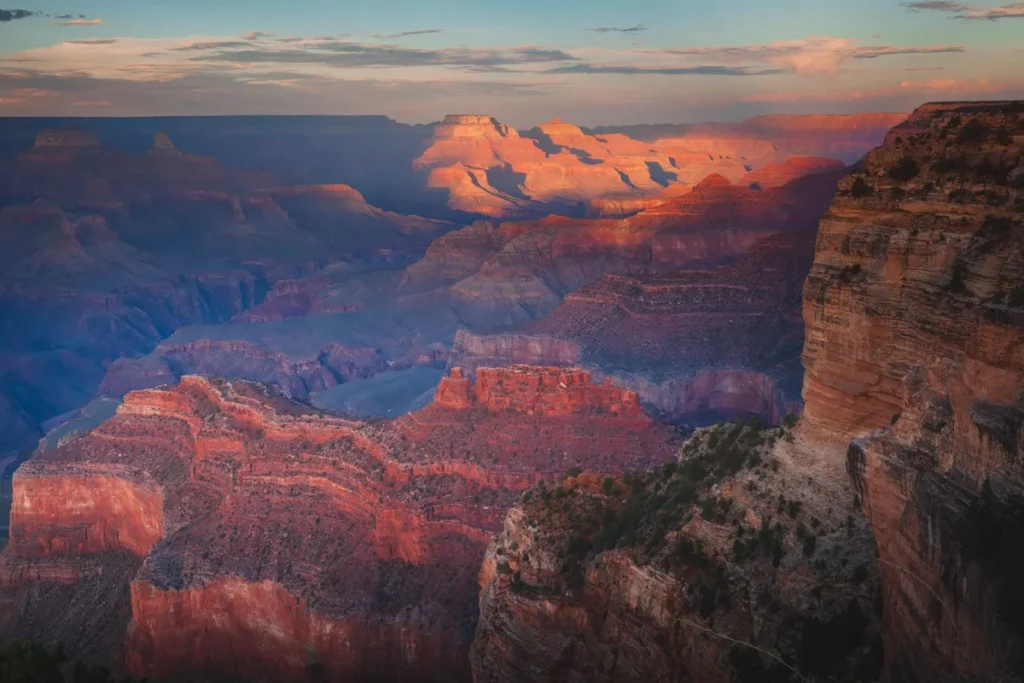
I still remember the first time I stood on the South Rim of the Grand Canyon and just stopped talking. The scale of it doesn’t register until you’re there — like staring at something too big for words.
After years of traveling, some of my most vivid memories come from the US National Parks system. Not all of them are easy to visit, but each one has a reason to be on your list. This guide covers 25 parks organized by what they do best — so you can skip the noise and find the one that fits how you like to travel.
Top Picks at a Glance
If you’re short on time, these are the ones worth putting first:
- Yellowstone — wildlife and geothermal wonders (Wyoming, Montana, Idaho)
- Zion — epic hikes and canyoneering (Utah)
- Yosemite — granite cliffs and waterfalls (California)
- Glacier — alpine scenery and road trips (Montana)
- Grand Canyon — awe-inspiring views and geology (Arizona)
- Olympic — diverse ecosystems from coast to rainforest (Washington)
- Denali — true wilderness and North America’s tallest peak (Alaska)
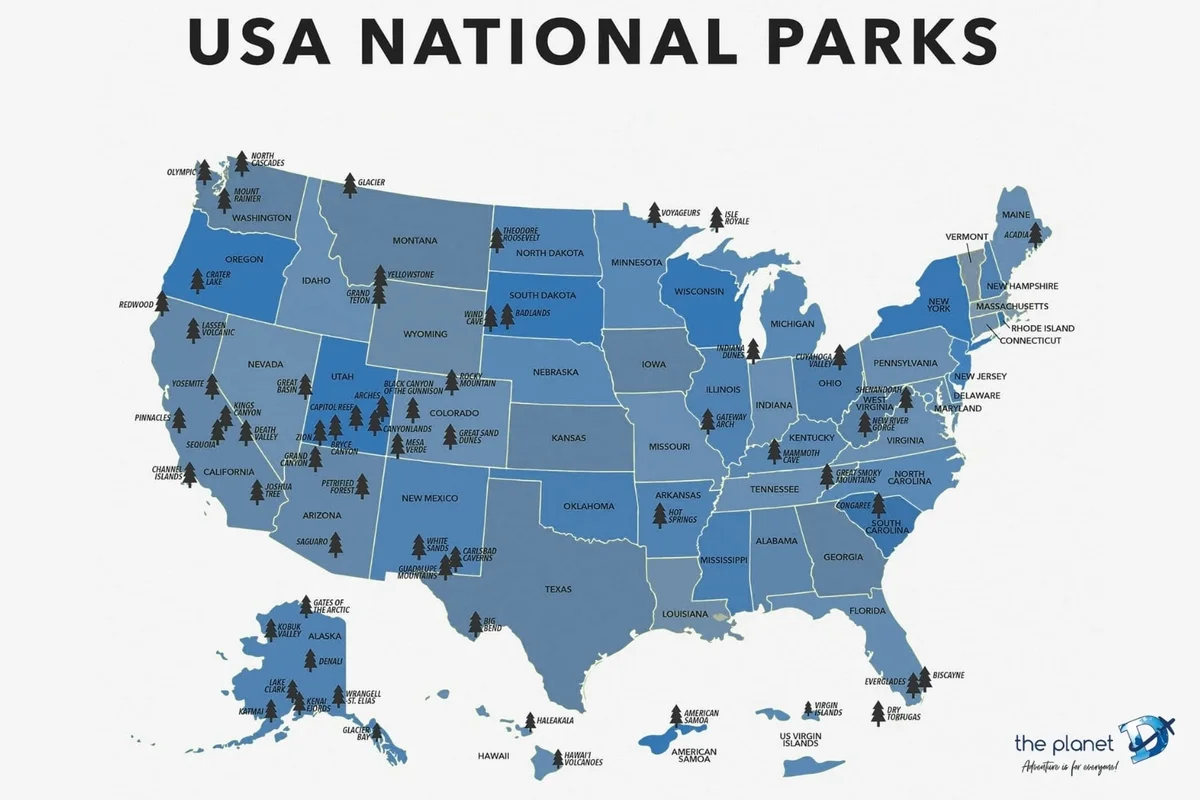
Best National Parks for Iconic Scenery
These are the parks that are famous for a reason. They draw big crowds because their scale makes you feel small in the best way.
Yellowstone National Park, Wyoming
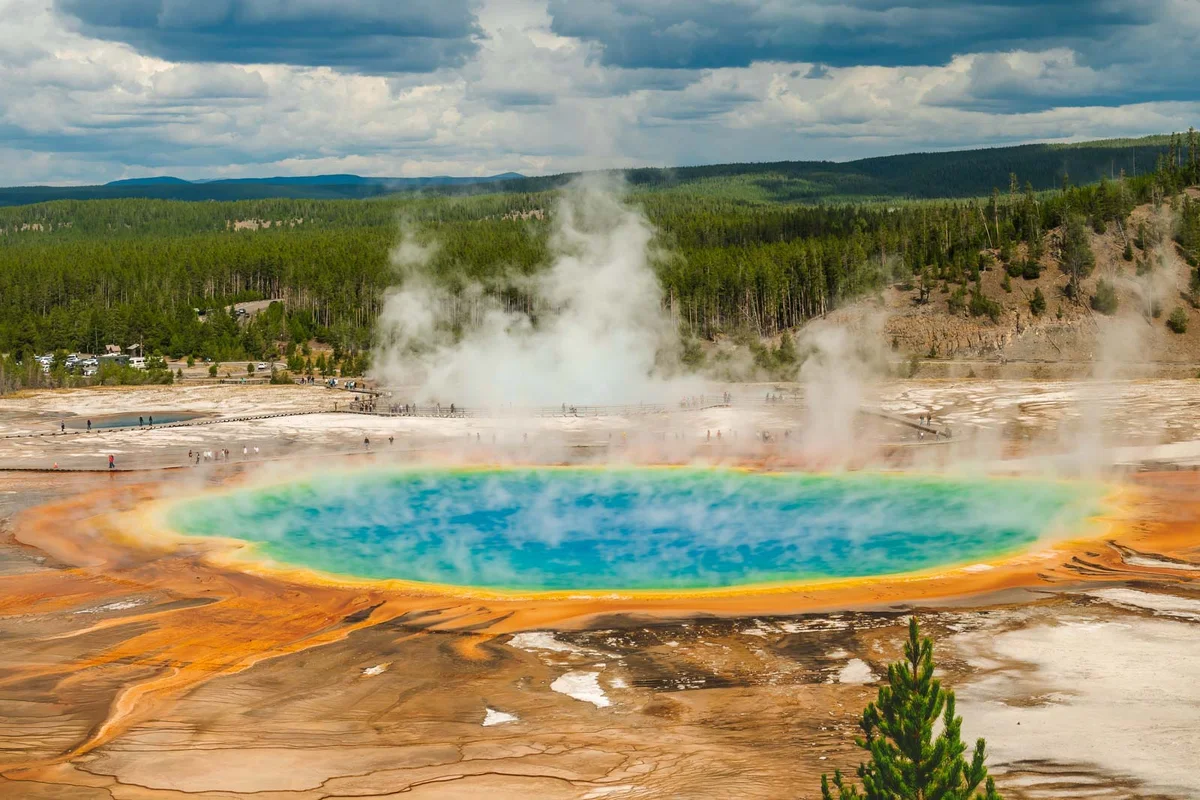
Yellowstone was the world’s first national park, and it feels like a landscape built to impress. The largest concentration of geysers on the planet, bubbling mud pots, wildlife roaming freely — it delivers a powerful dose of untamed nature. I’ve been back several times, and a bison herd moving across a valley never gets old.
Best for: Wildlife viewing and geothermal wonders.
My tip: Take the short hike to the Grand Prismatic Overlook instead of crowding around the spring itself. The view from above shows off the incredible colors much better.
When to go: Spring and autumn offer fewer crowds and great wildlife spotting.
Grand Canyon National Park, Arizona
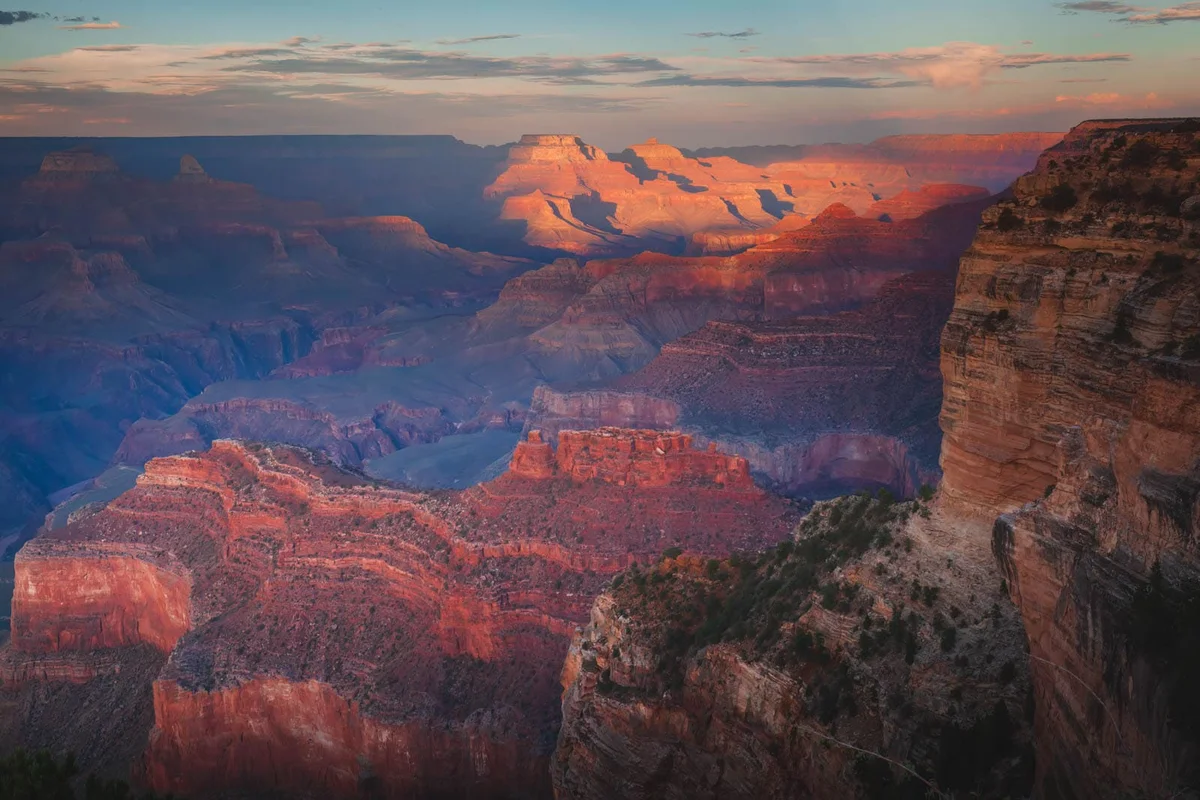
The Grand Canyon is one of those rare places that actually lives up to the reputation. The moment I looked out from the South Rim, it took my breath away — like staring at a photograph so detailed your brain can’t quite process it.
Best for: Awe-inspiring views and understanding geological time.
My tip: Stay for sunset. Find a quiet spot along the Rim Trail away from the main viewpoints and watch the canyon colors shift. It’s worth the wait.
When to go: March to May and September to November — pleasant weather without the intense summer heat.
Yosemite National Park, California
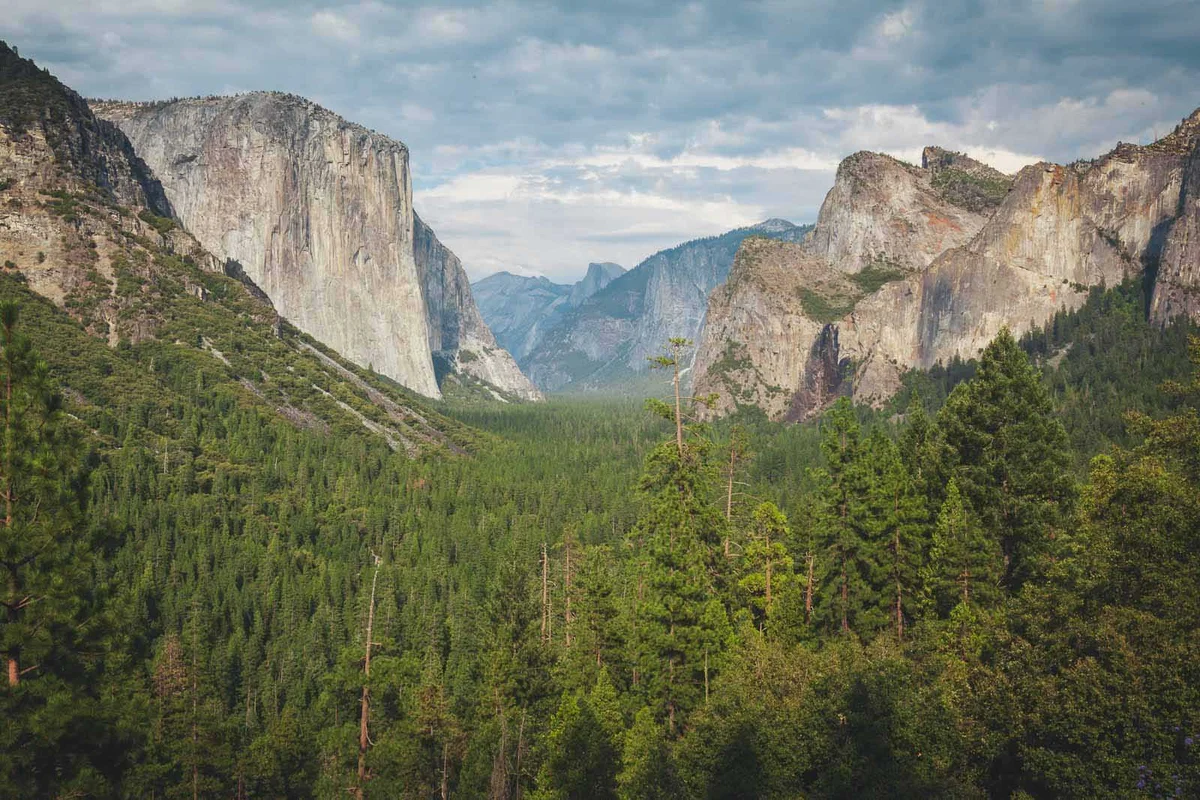
The dream of visiting Yosemite started for me with an Ansel Adams photograph. When I finally made it there, I spent hours trying to recreate those iconic scenes. The park is a photographer’s paradise, but also a hiker’s and climber’s.
Best for: Granite cliffs, giant waterfalls, and world-class photography.
My tip: Go to Tunnel View in the late afternoon when the light hits El Capitan and Half Dome just right. It’s the classic scene for a reason.
When to go: Spring for peak waterfall flow from snowmelt; autumn for color and fewer people.
Zion National Park, Utah
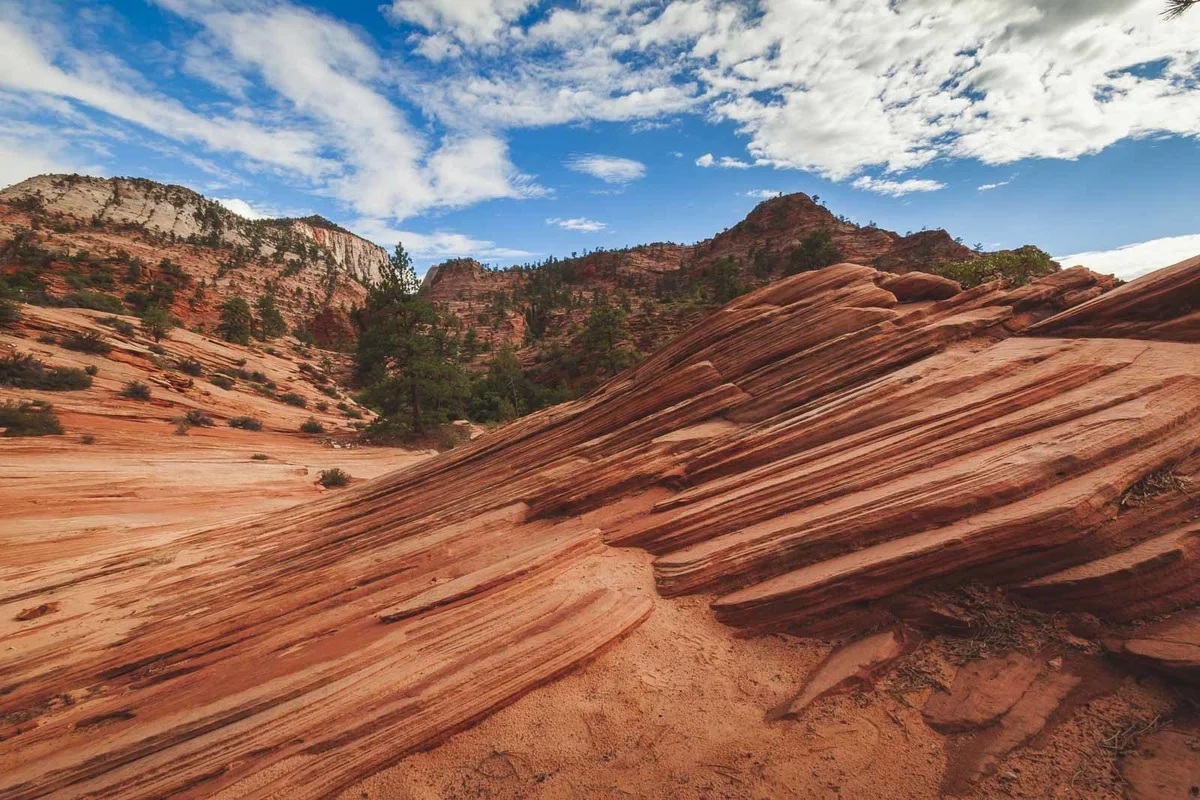
Zion is the crown jewel of Utah’s Mighty Five national parks. Unlike the Grand Canyon where you look down from the rim, Zion puts you on the canyon floor — surrounded by massive sandstone cliffs rising on either side. It’s more intimate, and somehow more intense.
Best for: Unforgettable hikes and unique canyon views.
My tip: Use the park’s free shuttle to access the main canyon drive. It runs most of the year, is efficient, and lets you skip the parking hunt entirely.
When to go: Spring and autumn for comfortable hiking temperatures. Summer gets extremely hot.
Best National Parks for Hiking & Adventure
If your idea of travel involves lacing up boots and heading into the wild, these parks offer scale and challenge that goes beyond a scenic overlook.
Denali National Park, Alaska
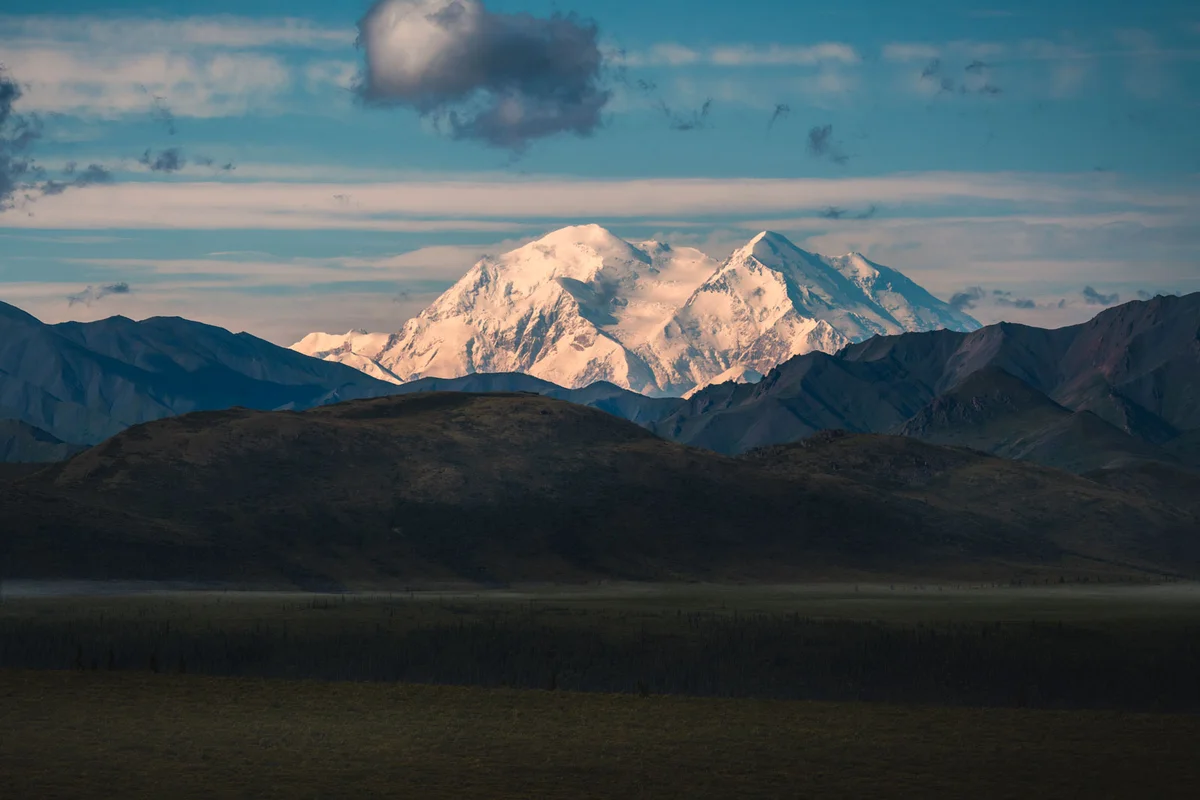
Denali is wilderness on another level. Spanning six million acres with only one road into its interior, this is Alaska at its most untamed. I’ve visited three times, and each trip reinforces how big nature can be. Seeing Denali — the continent’s tallest mountain — emerge from behind clouds is a moment that stays with you.
Best for: True wilderness, wildlife viewing, and mountaineering.
My tip: Take a flightseeing tour. It’s the only way to truly appreciate the scale of the Alaska Range up close.
When to go: Late May to early September for full accessibility.
Glacier National Park, Montana
Over 700 miles of trails, high alpine meadows, active glaciers, and deep cold lakes — Glacier is a hiker’s paradise. It shares a border with Waterton Lakes National Park in Alberta, forming the world’s first International Peace Park.
Best for: Epic day hikes and dramatic road trips.
My tip: Book a vehicle reservation well in advance for the Going-to-the-Sun Road during peak season. It’s required now, and they go fast.
When to go: July and August — the Going-to-the-Sun Road is fully open and trails are mostly snow-free.
Rocky Mountain National Park, Colorado
Peaks soaring over 14,000 feet put you straight into a high alpine world of granite mountains and tundra. The Continental Divide runs right through the park, and you feel the elevation with every step.
Best for: High-altitude hiking and accessible mountain scenery.
My tip: Give yourself a day to acclimatize before tackling strenuous hikes. Drink water. The air is thin up here, and you’ll feel it.
When to go: June to September for the best weather in the high country.
Canyonlands National Park, Utah
If you want Utah’s canyon country without the crowds of Zion or Arches, this is your place. It’s the largest of Utah’s Mighty Five — a landscape of immense canyons, mesas, and buttes carved by the Colorado and Green rivers. Exploring here feels like an expedition.
Best for: Backcountry exploring, 4×4 adventures, and solitude.
My tip: If you only have one day, stick to Island in the Sky. It’s the most accessible district and offers top-down views of the canyon systems, including Mesa Arch.
When to go: Spring and autumn for moderate temperatures.
Best National Parks for Otherworldly Landscapes
Some landscapes stop you in your tracks. These parks are defined by unusual geology — from impossible rock arches to salt flats below sea level.
Arches National Park, Utah
Over 2,000 documented natural stone arches — more than anywhere else on Earth. The deep red rock against a brilliant blue sky is stunning. Seeing Delicate Arch perched on the edge of a sandstone bowl is one of those moments that lives up to the hype.
Best for: Incredible geology and short, rewarding hikes.
My tip: A timed entry reservation is required during peak hours. Book online well in advance — they run out quickly.
Badlands National Park, South Dakota
I’ll admit the Badlands surprised me. I expected a desolate, dry landscape and found something full of subtle color and texture. The sharply eroded buttes and pinnacles create layers that change dramatically with the light.
Best for: Unique landscapes, scenic drives, and fossil hunting.
My tip: Get out of the car. The Badlands Loop Road is great, but short hikes like the Notch Trail or Door Trail take you right into the formations.
Death Valley National Park, California & Nevada
The hottest, driest, and lowest place in North America. Visiting feels like stepping onto another planet. In summer, temperatures can be dangerously high — I always explored early morning, carried more water than I thought I’d need, and checked the park website before heading out.
Best for: Extreme environments, desert landscapes, and stargazing.
My tip: Visit Zabriskie Point at sunrise. The first light hitting those golden eroded badlands is unforgettable.
Bryce Canyon National Park, Utah
You have to blink a few times when you look out over the main amphitheatre. It’s not really a canyon but a series of natural bowls filled with thousands of pink and orange hoodoos. It feels like a fantasy world.
Best for: Unique hoodoo formations and stargazing.
My tip: Hike the Queen’s Garden and Navajo Loop combination — it takes you down among the hoodoos for an entirely different perspective.
Joshua Tree National Park, California
The Mojave and Colorado deserts meet here, creating a surreal landscape of quirky trees and massive rock piles. The park has a certain energy — part desert wilderness, part bohemian spirit. The Joshua Trees look like something out of a Dr. Seuss book against a sunset.
Best for: Bouldering, photography, and desert sunsets.
Crater Lake National Park, Oregon
A lake that is almost impossibly blue. Crater Lake formed when a volcano collapsed and is now the deepest lake in the United States. Fed by rain and snow, the water clarity takes your breath away — photos genuinely don’t do it justice.
Best for: Lake views and scenic drives.
My tip: Take a boat tour to visit Wizard Island, the volcanic cone rising from the water. The 33-mile Rim Drive circles the entire lake with dozens of pull-offs along the way.
Best Coastal & Island National Parks
These parks are defined by their relationship with water — dramatic coastlines, remote islands, and glacier-carved fjords. They take a bit more planning but reward you with something far from ordinary.
Olympic National Park, Washington
It’s like visiting three parks in one. In a single day I went from the rugged, sea-stack-dotted Pacific coast to a dense temperate rainforest, then up into glaciated mountain peaks. The trails through the moss-draped trees of the Hoh Rainforest are unlike anything else.
Best for: Diverse ecosystems and rainforest hikes.
My tip: Pack rain gear regardless of the forecast. The weather changes in an instant on the western side.
Glacier Bay National Park, Alaska
A protected area of 3.3 million acres that makes sense only when seen by ship. I’ve cruised through its waters three times, and watching tidewater glaciers calve huge chunks of ice into the sea is a sound you never forget.
Best for: Glaciers, marine wildlife, and fjord scenery.
Acadia National Park, Maine
One of the few places in North America where mountains meet the sea. I loved hiking up granite peaks and then exploring a rugged rocky coastline just a short drive away. It’s the jewel of the North Atlantic Coast.
Best for: Coastal hikes and ocean views.
My tip: Drive to Cadillac Mountain for sunrise — during certain times of year, it’s the first place the sun touches the US. Book a vehicle reservation in advance.
Dry Tortugas National Park, Florida
Situated 70 miles west of Key West, this is perhaps the most isolated national park in the lower 48. Getting there — by ferry or seaplane — is part of the adventure. Fort Jefferson dominates a remote island surrounded by clear turquoise water and coral reefs.
Best for: Snorkeling, history, and true remoteness.
Haleakala National Park, Hawaii
House of the Sun on Maui offers two completely different worlds. The summit sits over 10,000 feet up — I drove there before dawn for sunrise above the clouds, shivering in the cold until the sky ignited with color.
Best for: Sunrises and unique volcanic landscapes.
My tip: Sunrise reservations are mandatory between 3:00 AM and 7:00 AM. They open 60 days in advance, so book early.
American Samoa National Park, American Samoa
The second least-visited park in the system — it’s incredibly remote. Located deep in the South Pacific, it’s the only US national park south of the equator. Spread across three islands, it protects pristine tropical rainforests and coral reefs.
Best for: An off-the-grid experience, tropical rainforests, and Samoan culture.
Best National Parks for Forests & Mountains
These parks are home to some of the oldest living things on Earth — trees that have been standing longer than most civilizations.
Great Smoky Mountains National Park, NC & TN
This is the most visited national park in the United States, with over 14 million visitors a year. It was actually the first national park I ever visited — my family would stop here on our annual trip south from Canada. The hazy smoky fog hanging over rolling Appalachian Mountains gives it a quiet beauty.
Best for: Forest hikes, waterfalls, and Appalachian culture.
My tip: Enter through Townsend or Cosby instead of the main gate to avoid Cades Cove traffic.
Sequoia & Kings Canyon National Parks, California
In Sequoia, you walk among the largest trees on Earth. Standing next to the General Sherman Tree — the world’s largest by volume — makes you feel incredibly small. Just next door, Kings Canyon has soaring granite cliffs and one of the deepest canyons in North America.
Best for: Giant trees, deep canyons, and high Sierra hiking.
Redwood National Park, California
The coast redwoods are the tallest living things on Earth. Walking through these forests feels reverent — the canopy hundreds of feet above filters everything into quiet light. Some of these trees are over 2,000 years old.
Best for: Old-growth forest walks and scenic coastal drives.
Grand Teton National Park, Wyoming
Located just south of Yellowstone but standing entirely on its own. What I love about the Tetons is their dramatic presentation — no foothills. The jagged peaks rise abruptly from the flat floor of Jackson Hole valley.
Best for: Mountain photography and wildlife viewing.
My tip: Head to Schwabacher Landing at sunrise for mountain reflections on the Snake River. Mormon Row is where you’ll find those famous barn shots.
Best National Parks for Avoiding the Crowds
These parks trade dramatic peaks for a different kind of immersion — quiet, complex ecosystems that reward patience.
Everglades National Park, Florida
Covering 1.5 million acres, the Everglades is a vast and subtle wetland wilderness. It’s not about grand overlooks; it’s somewhere you explore slowly. The only place on Earth where alligators and crocodiles coexist.
Best for: Birdwatching, paddling, and unique wildlife.
My tip: Visit during the dry season (December to April). Wildlife congregates around remaining water sources and becomes much easier to spot.
Isle Royale National Park, Michigan
A remote island cluster in Lake Superior, closer to Canada than to the US mainland. One of the least-visited parks — which is exactly the point. No roads, no crowds, just moose and wolves and silence.
Best for: Solitude, backpacking, and backcountry camping.
My tip: Pack out everything you pack in. The island has no roads; you explore on foot or by boat.
The Golden Hour
If there’s one hour worth saving across all 25 parks, it’s the last light before sunset — when rock turns warm and the crowds thin out. At Grand Canyon I’ve seen strangers just stop mid-stride on the Rim Trail, like they forgot how to walk for a moment.
FAQ
What is the #1 national park in the USA?
In terms of visitors, Great Smoky Mountains National Park leads with over 14 million per year. But the best park depends entirely on what you’re after — Yellowstone for wildlife, Zion for hiking, or Glacier for alpine scenery.
Which state has the most national parks?
California has nine — including Yosemite, Joshua Tree, and Death Valley. It’s an incredible state for a national park road trip.
Is it worth buying a National Parks Pass?
Absolutely. If you plan to visit three or more parks in a year, the America the Beautiful annual pass saves money and helps fund maintenance of these landscapes.
A Note from Luna
After years of traveling the world, I keep coming back to the US National Parks. From the deserts of the southwest to the glaciers of Alaska, they offer a lifetime of adventure — and every time I think I’ve seen it all, one more canyon or mountain range proves me wrong.