
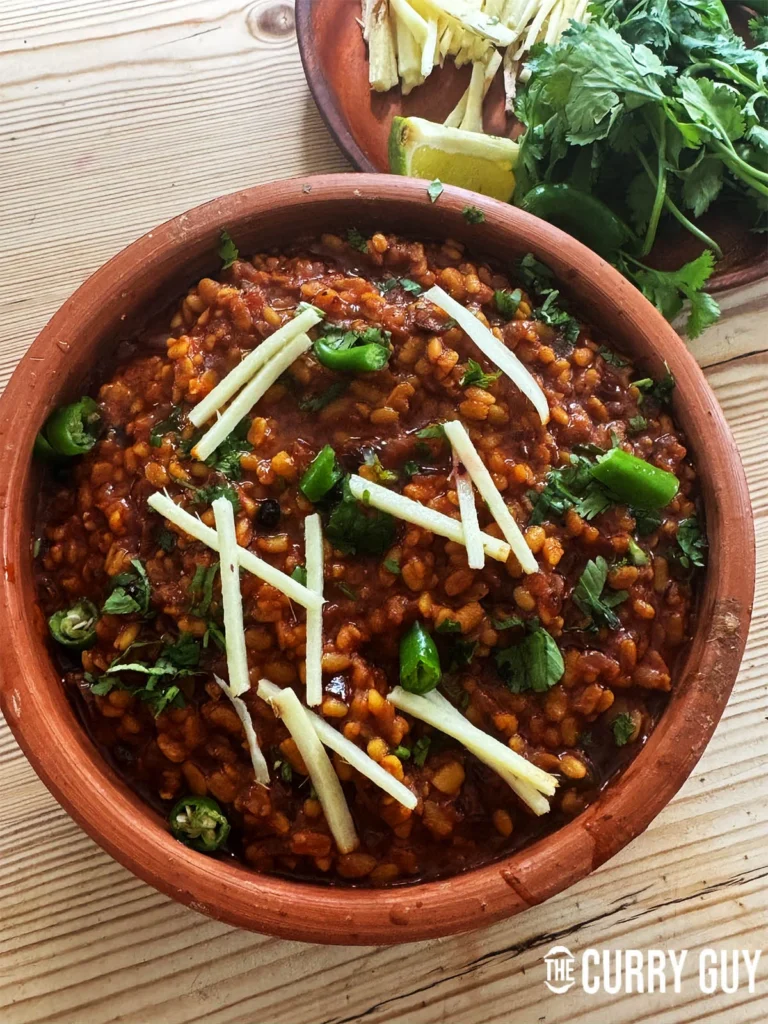
I was standing at a Pakistani takeaway window on a Saturday evening, the queue moving slowly, when I caught the smell of ghee hitting hot onions. The sign above said daal mash. I ordered it without thinking.
That was years ago. Now I make it myself whenever the weather turns cold and my kitchen needs something that smells like a proper home.
{{image:cover.webp}}
About Daal Mash
Daal mash is one of those dishes that looks simple until you taste it. Split white urad lentils are simmered slowly in ghee and warm spices — turmeric, cumin, coriander, a touch of kasoori methi (dried fenugreek leaves) at the end. The result is creamy but not mushy. Each lentil keeps its shape. I think of it as somewhere between soup and rice.
Unlike dal makhani, which leans on cream and butter for richness, daal mash gets its depth from time. Slow cooking. A good masala base built the old way: onions fried until golden, whole spices bloomed in hot ghee, tomatoes or passata simmered down.
In the UK you’ll find it at Pakistani restaurants more often than at British Indian curry houses. If you’re in North America, look for Pakistani-owned spots rather than the all-you-can-eat buffets where dal makhani tends to take over every menu.
Ingredients
You can see the full quantities in the recipe summary below. Here is what goes into it:
- Ghee
- Garlic cloves
- Ground turmeric
- White split urad lentils
- Green bullet chillies, sliced
- Cloves and black peppercorns (for the masala)
- Red onions
- Kashmiri chilli powder
- Red chilli flakes
- Ground cumin
- Ground coriander
- Tomatoes or passata
- Kasoori methi
- Garam masala
- To garnish: julienned ginger, chopped chillies, fresh coriander
{{image:image-01.jpg}}
How to Make It — Step by Step
- Fry the garlic. Melt 4 tablespoons of ghee in a saucepan over medium-high heat. Add sliced garlic cloves and fry until golden brown. Take the pan off the heat if it starts getting too dark.
- Add water, turmeric, and chillies. Pour in one litre (4 cups) of water with the ground turmeric and sliced green bullet chillies. Bring to a rolling simmer.
- Cook the lentils. Wash the urad dal in several changes of water and soak for 30 minutes. Add it to the simmering pot along with salt. Reduce heat to medium and cook gently for about 50 minutes, or until almost done.
- Skim the foam that rises to the top as the daal simmers.
- Start the masala while lentils cook. Heat the remaining ghee in another pan. Add cloves and black peppercorns for about 30 seconds, then stir in chopped onions with salt. Fry for 10 to 15 minutes until golden brown and soft.
- Add the spices. Stir in Kashmiri chilli powder, red chilli flakes, ground cumin, and ground coriander.
- Build the sauce. Add chopped tomatoes or passata with about 70 ml (1/4 cup) of water. Let it simmer gently on low heat until the lentils are ready.
- Combine everything. When the lentils are about 80% cooked, strain them and add both the lentils and any solids to the masala base. Stir well.
- Final simmer. Continue on medium heat until the lentils are soft like rice and creamy. Add a splash of water if needed — but not too much. When the ghee starts separating and rising to the surface, rub kasoori methi between your fingers over the pot, then sprinkle in garam masala. Season with salt and pepper to taste.
- Serve with julienned ginger, chopped chillies, fresh coriander on top. Squeeze lemon or lime juice at the table.
{{image:image-02.jpg}}
The Golden Hour
The best time to eat daal mash is not right after it finishes cooking — it’s the next day, reheated slowly over medium heat with a splash of water. The flavours settle overnight and the lentils absorb even more of that ghee-spice broth.
Useful Equipment
You don’t need anything special. A heavy-based saucepan helps prevent sticking. If you’re short on time, a pressure cooker or Instant Pot works well — cook under pressure for 10 to 12 minutes, then let it release naturally.
Storage and Reheating
Refrigerate in an airtight container for up to four days. Freeze in portion-sized containers for up to three months — defrost overnight before reheating. Add a splash of water when reheating; the daal thickens considerably when chilled.
Top Tip
Do not rush the lentils. Gentle simmering is what gives daal mash its creamy consistency. Stir occasionally and add water gradually rather than all at once. The final texture should coat a spoon but still show individual lentils.
Frequently Asked Questions
Do you need to soak urad dal?
Not necessarily. Split white urad dal cooks relatively quickly without soaking, though 30 minutes or longer will shorten the cooking time.
Can you use whole white urad dal instead of split?
You can, but the texture will differ significantly and it will take longer to cook.
Is daal mash spicy?
No — it is generally mild. The chilli powder and dried chilli flakes contribute more aroma than heat.
Is daal mash the same as dal makhani?
No. Dal makhani uses whole black urad and often kidney beans, enriched with butter and cream. Urad dal mash is lighter and more rustic.
Can you make daal mash vegan?
Absolutely. Use vegetable oil or dairy-free ghee instead of regular ghee.
I once made this on a rainy Sunday afternoon, forgetting to set the timer — by the time I looked up from my desk, the kitchen smelled like someone’s grandmother had been cooking there all morning. That is daal mash for me. A quiet dish that shows up when you need it.
Looking for more lentil recipes? Try Dal Makhani, Chana Dal, or Masoor Dal.